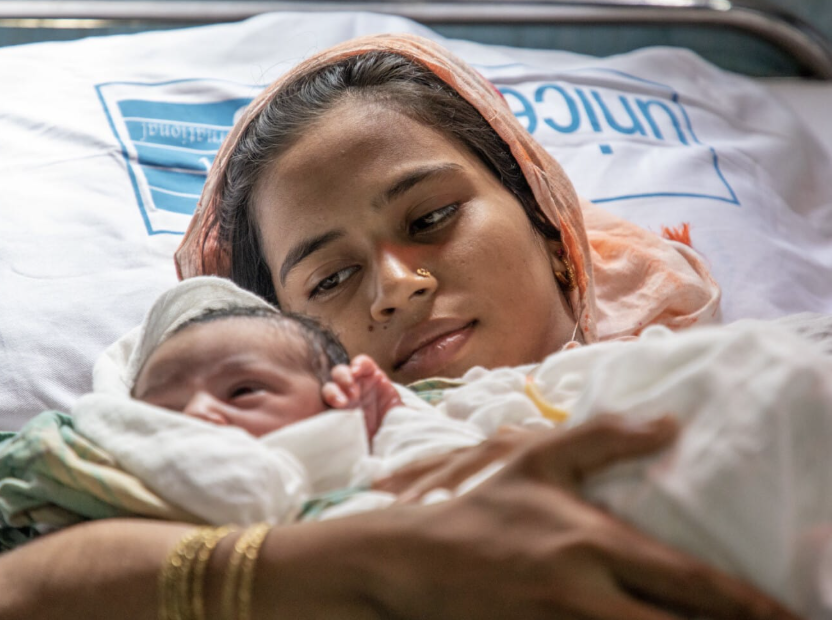
NEW DELHI — The Ministry of Health and Family Welfare (MoHFW) recently released the headline factsheet for the sixth round of the National Family Health Survey (NFHS-6, 2023-24). While the initial data presents a highly encouraging narrative of clinical and structural progression—highlighting institutional deliveries hitting $90.6\%$, full childhood immunization scaling to $87.1\%$, and severe childhood wasting dipping sharply to $5.2\%$—the medical, epidemiologic, and public health communities are highly focused on what has been omitted.
A comparative analysis reveals a dramatic contraction in the density of data made available to the public. The NFHS-5 (2019-21) factsheet offered a robust matrix of 131 key indicators. By contrast, the newly minted NFHS-6 factsheet has truncated this list to 101 indicators. Public health specialists, data scientists, and senior clinicians are raising valid questions regarding the erasure of 30 vital datasets that directly impact diagnostic tracking, epidemiological auditing, and community health interventions.
NFHS-5 Factsheet: [████████████████████████████████████████] 131 Indicators
NFHS-6 Factsheet: [██████████████████████████████] 101 Indicators (30 Dropped)
The Official Stance: “Data Harmonisation”
Responding to immediate queries from medical policy analysts, top officials within the Union Health Ministry defended the omissions, framing the decision as a strategic push toward “data harmonisation” and the reduction of redundant statistical surveying across parallel state machineries.
According to ministry sources, several omitted indices are actively captured by alternative government metrics. For instance:
- Vital Demographics: Core mortality indicators and birth/death registration numbers are routinely managed via the Sample Registration System (SRS).
- Socio-Environmental Infrastructure: Access data on cooking fuel and sanitation facilities are tracked directly inside administrative portals for the Pradhan Mantri Ujjwala Yojana and Swachh Bharat Mission.
- Oncology Data: Cancer data tracking falls under the purview of specialized surveys spearheaded by the Indian Council of Medical Research (ICMR).
While data streamlining is administrative common sense, healthcare professionals note that the true clinical strength of the NFHS does not lie in standalone percentages. Instead, its unparalleled value resides in its multi-layered, district-level granularity that allows physicians and public health teams to cross-link health parameters directly with income, geography, education, and caste dynamics.
Critical Clinical Visuals Absent from the Headline Factsheet
| Omitted Category | Specific Missing Indicators | Why Clinicians and Epidemiologists are Concerned |
| Hematology & Nutrition | • 7 distinct indicators assessing the exact prevalence of anaemia across age, sex, and pregnancy cohorts. | • Prevents cross-analysis with the Anaemia Mukt Bharat intervention layout. • Obscures localized micro-nutrient profiling at the district level. |
| Vital Demographics & Sex Ratios | • Population sex ratio. • Sex ratio at birth (SRB). • Infant, neonatal, and under-5 mortality rates. | • Truncates the ability to study pediatric survival variations against maternal education or domestic economic quintiles. |
| Family Planning & Quality of Care | • Specific methodologies of contraceptives used. • Healthcare worker counseling on family planning and side-effect awareness. | • Blinds clinicians to regional patterns of contraceptive failure or poor medication compliance due to unaddressed side effects. |
| Oncology & Preventative Screening | • Screening frequency data for the 3 most prevalent cancers: Cervical, Breast, and Oral malignancies. | • Hampers efforts to evaluate early detection efficiency at upgraded Ayushman Arogya Mandirs (Primary Health Centres). |
| Infectious Disease & Out-of-Pocket Expenses | • ORS and Zinc therapeutic uptake ratios for pediatric diarrhea. • HIV awareness data. • Out-of-pocket expenditure (OOPE) per institutional delivery. | • Restricts clear calculations on whether financial protection models like Ayushman Bharat successfully insulate families during labor. |
Technical Deconstructions: The Primary Areas of Clinical Impact
1. The Total Absence of the Anaemia Matrix
The blanket exclusion of all seven indicators evaluating the prevalence of anaemia stands out as highly controversial. Historically, the data from NFHS-5 paints a distressing picture, indicating a widespread prevalence rate of $67.1\%$ among children and $52.2\%$ among pregnant women. Following immense bureaucratic and political debates surrounding these figures, the methodology itself came under scrutiny.
Experts from the government argued that traditional capillary blood collection (via finger pricks) frequently creates haemodilution or mathematical biases that artificially overestimate systemic anaemia. To rectify this, the state has decoupled anaemia from the NFHS entirely, redirecting future analysis to the upcoming, specialized Diet and Biomarkers Survey in India (DABS-I) conducted by the National Institute of Nutrition (NIN), which relies on more precise venous blood draws.
While technically sound, clinicians note that dropping this from the core factsheet leaves them temporarily working in a data blind spot regarding everyday maternal and child nutrition programs.
2. Family Planning Quality Metrics & Contraceptive Counselling
For doctors managing reproductive medicine and public health clinics, the elimination of qualitative family planning metrics is particularly problematic. NFHS-6 no longer reveals whether community frontline workers (such as ASHAs or ANMs) are actively advising patients on potential adverse effects before prescribing or administering long-acting reversible contraceptives (LARCs) or oral pills.
Without this cross-sectional data, local clinical setups cannot accurately evaluate whether high discontinuation rates of certain birth control methods stem from clinical complications or a simple lack of pre-prescription patient counseling.
3. Out-of-Pocket Expenditure (OOPE) for Deliveries
The financial realities of accessing medicine directly affect patient health outcomes. While NFHS-6 praises the massive expansion of public healthcare insurance (rising from $41\%$ to $60.2\%$), it drops the metric tracking the exact out-of-pocket expenditure incurred during childbirth.
While the National Health Accounts (NHA) publish macro-level estimations regarding personal health expenditures, they do not possess a dedicated, micro-stratified tracking tool strictly isolated to labor and delivery. Doctors working in rural or peri-urban environments need this data to understand if patients avoid postnatal care or delay neonatal examinations due to hidden clinical fees.
4. Non-Communicable Diseases (NCDs) vs. Screening Backlogs
The NFHS-6 factsheet includes a few stark numbers on lifestyle conditions: high blood sugar metrics have climbed significantly, logging at $17.8\%$ for women and $20.9\%$ for men. Concurrently, obesity indices have surged across the board.
Yet, as metabolic syndromes skyrocket, the factsheet completely dropped data reflecting screening rates for oral, breast, and cervical cancers. For primary care physicians trying to reduce oncological mortality via early triage, the lack of district-level screening percentages makes it exceptionally difficult to spot regional diagnostic shortfalls.
Editorial Takeaway for the Indian Medical Community:
Data harmonisation and structural integration are noble administrative objectives. However, fragmented data can lead to fragmented medicine. For a country dealing with a dual burden of severe nutritional deficits alongside an explosion of metabolic syndromes, medical practitioners require access to centralized, heavily cross-referenced datasets. The health sector must remain vigilant and voice the ongoing need for granular, deeply descriptive health indicators as the full, comprehensive report of NFHS-6 prepares for publication.