Legal Heirs of Deceased Doctors Can Be Impleaded in Medical Negligence Cases, Rules Apex Court
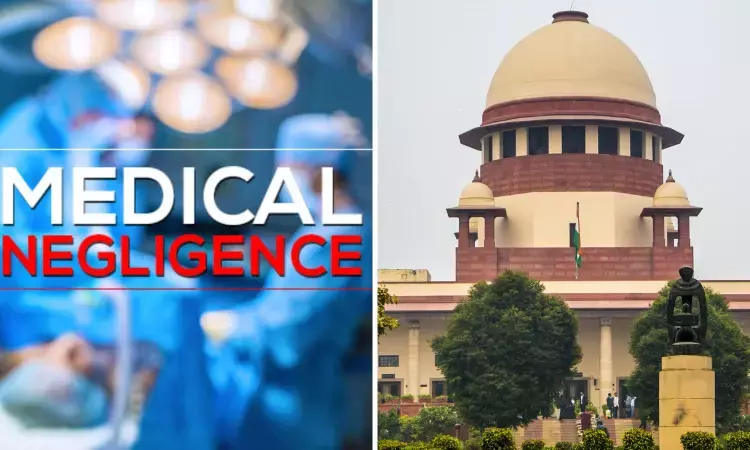
In a landmark judgment with far-reaching implications for the medical fraternity, the Supreme Court of India has ruled that legal heirs of deceased doctors can be impleaded in ongoing medical negligence proceedings, allowing complainants to continue pursuing compensation claims even after the doctor’s death.
The verdict, delivered by a bench comprising Justice JK Maheshwari and Justice AS Chandurkar, clarified that the “right to sue” survives under the provisions of the Consumer Protection Act, 1986 and the Consumer Protection Act, 2019.
The Court held that legal heirs can be brought on record in such cases and may be liable to satisfy the decretal amount only to the extent of the estate inherited from the deceased doctor.
The ruling came in a decades-old case where a doctor, now deceased, had allegedly caused vision loss to a patient following surgery. Both the complainant and the doctor have since passed away.
Supreme Court Clarifies Extent of Liability
While upholding the continuation of proceedings, the apex court emphasized that liability cannot automatically extend to personal claims beyond the deceased doctor’s estate.
The bench observed that complainants must first establish negligence and prove that claims are legally recoverable against the estate under Section 306 of the Indian Succession Act, 1925.
The Court further clarified that consumer forums must distinguish between claims maintainable against the estate and purely personal claims that lapse upon the death of the doctor.
According to the judgment, the extent of liability will depend on pleadings, evidence, and the nature of the claims raised before the adjudicating authority.
Doctors Raise Concerns Over Psychological and Professional Impact
The ruling has triggered intense debate within the medical community, with several doctors’ associations expressing concern over its practical and psychological implications.
Chief Patron of FAIMA Doctors Association, Dr Rohan Krishnan, stated that the judgment attempts to balance patient rights and continuity of legal remedy.
He explained that if proceedings automatically ended with the death of the doctor, genuinely affected patients could lose their right to compensation in long-pending cases.
However, Dr. Krishnan also warned that the verdict may deepen litigation anxiety among doctors and lead to greater defensive medicine.
He stressed that the ruling does not create “hereditary negligence liability” but only “estate-linked survivability of compensation claims,” meaning heirs are not personally culpable for the alleged negligence.
Dr. Krishnan further noted that the judgment weakens the traditional legal maxim “actio personalis moritur cum persona,” meaning personal actions die with the person, and signals a shift toward a compensation-oriented approach under consumer law.
At the same time, he highlighted concerns that legal heirs who had no role in treatment may still face prolonged litigation and harassment.
He added that the judgment could increase the importance of professional indemnity insurance, faster disposal of medical negligence cases, and clearer statutory safeguards for doctors.
FAIMA has indicated that it plans to challenge the ruling before the Supreme Court.
Medical Experts Call for Balanced Legal Framework
National Vice President of FAIMA, Dr Lakshya Kumar Jha, expressed concern that extending liability in medical negligence cases demands greater caution because medicine is not a mechanical profession and often involves uncertainty and complex clinical judgment.
According to Dr. Jha, placing the burden of defending professional decisions on legal heirs who lack medical expertise creates a fundamentally unfair situation.
He cautioned that such interpretations may intensify defensive medical practice and increase psychological stress among healthcare professionals already working under fear of litigation and criminal prosecution.
Dr. Jha suggested that liability should be strictly limited to the inherited estate, along with safeguards such as:
- Independent expert medical boards,
- Higher thresholds for proving negligence after a doctor’s death,
- Time-bound adjudication of disputes.
He emphasized that while patient rights are essential, fairness toward doctors and their families must also be protected.
FORDA, HRDA Express Concern Over Impact on Healthcare Sector
National General Secretary of Federation of Resident Doctors Association, Dr Meet Ghonia, said the ruling raises important ethical and legal concerns.
He observed that medical outcomes are not always fully controllable despite evidence-based care and best efforts by doctors.
According to him, extending liability beyond a doctor’s lifetime may create fear, encourage defensive medicine, and impose additional psychological burdens on families who were never directly involved in patient care.
Meanwhile, the Healthcare Reforms Doctors Association also expressed concern regarding the broader implications of the judgment.
The association stated that medical practice involves complex decision-making under emergency and resource-constrained conditions, and extending litigation to family members may lead to emotional, financial, and psychological distress.
HRDA warned that the ruling could further aggravate insecurity among doctors, many of whom already face workplace violence, criminal cases, prolonged litigation, and burnout.
The association urged the Union Health Ministry, National Medical Commission, and stakeholders to examine the long-term impact of the judgment on India’s healthcare system and develop a balanced legal framework that protects both patients and medical professionals.
Growing Debate Over Medical Negligence Laws in India
The Supreme Court judgment has reignited debate over the evolving framework of medical negligence laws in India.
While patient rights groups may view the verdict as strengthening access to justice and compensation, sections of the medical fraternity fear it could increase litigation pressure and discourage young doctors from entering high-risk specialties or underserved areas.
Experts believe the ruling may eventually push policymakers toward reforms involving medical indemnity insurance, specialized medical tribunals, expert review boards, and clearer legal standards for negligence claims against healthcare professionals.