

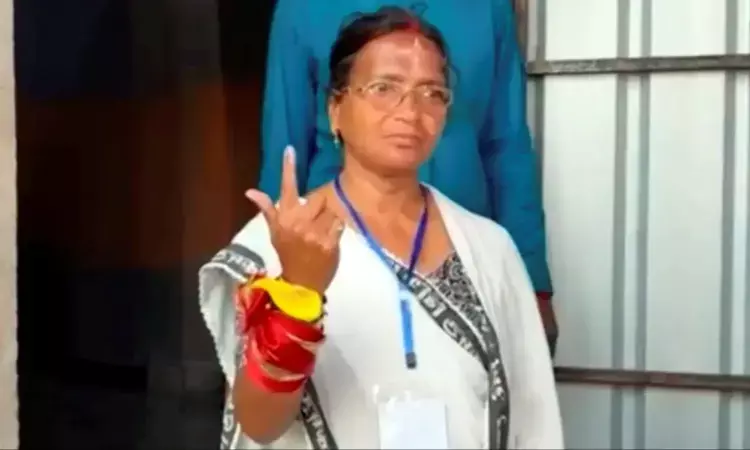
Mother of RG Kar victim turns grief into political momentum, leads by over 56,000 votes in a historic electoral upset
In a dramatic political development in West Bengal, Ratna Debnath has emerged as a defining figure in the 2026 assembly elections, leading by more than 56,000 votes in Panihati—long considered a bastion of the Trinamool Congress (TMC).
Her rise comes in the aftermath of the tragic rape and murder of her daughter at RG Kar Medical College and Hospital, an incident that has deeply shaken public sentiment and reshaped the electoral narrative across the state.
From Personal Tragedy to Political Turning Point
Debnath’s candidacy, backed by the Bharatiya Janata Party (BJP), transformed the election discourse from a traditional political contest into a broader moral debate on justice and women’s safety.
Her campaign message—centered on the idea that such a tragedy could happen to any family—resonated widely, especially among women voters. What began as a local issue quickly evolved into a statewide call for accountability.
Panihati: A Fortress Under Siege
Located in North 24 Parganas, Panihati has been under uninterrupted TMC control since 2011. Debnath’s massive lead over TMC candidate Tirthankar Ghosh signals a major political shift in the urban-industrial belt.
Her performance is being interpreted as a referendum on governance, particularly the handling of women’s safety and law-and-order issues following the RG Kar incident.
High Voter Turnout Reflects Public Sentiment
The election witnessed a record-breaking voter turnout of over 91% in the region, indicating heightened public engagement. Analysts suggest that a significant portion of this turnout represents a “silent vote,” particularly from women, rallying behind Debnath’s cause.
Reports of alleged intimidation during polling only intensified public sympathy, further strengthening her position.
Challenge to Mamata Banerjee’s Core Support Base
Debnath’s rise poses a direct challenge to Mamata Banerjee, whose political strength has traditionally relied on strong female voter support and welfare schemes like Lakshmir Bhandar.
This election, however, appears to have fractured that base, with many voters prioritizing justice and safety over welfare benefits.
A Moral Narrative Reshaping Bengal Politics
Unlike conventional campaigns driven by policy promises, Debnath’s appeal has been deeply emotional and symbolic. Her journey from a grieving mother to a political contender has created a powerful narrative that transcends party lines.
For many voters, supporting her represents a demand for systemic change and accountability.
A Defining Moment in 2026 Elections
As trends indicate a broader surge for the BJP in the state, Debnath’s lead in Panihati stands out as a symbolic victory. It highlights not just anti-incumbency sentiment but also the growing influence of citizen-led narratives in Indian politics.
Her story underscores a larger shift—where personal tragedy has catalyzed political change, potentially redefining the future of governance and electoral dynamics in West Bengal.
