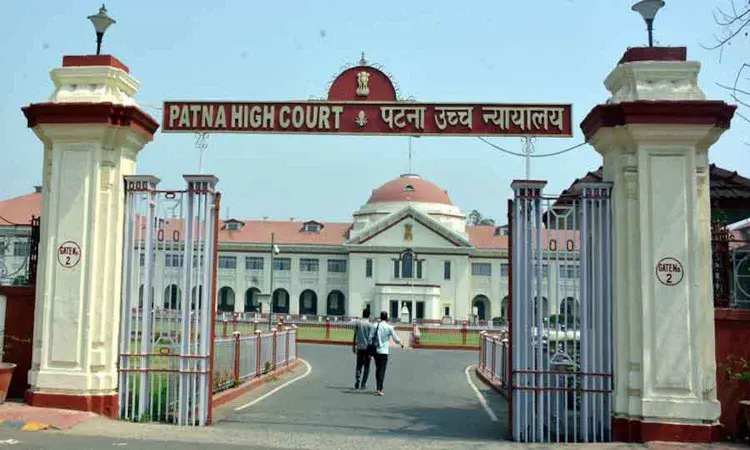
1.26 lakh people seek counselling; court flags gaps in infrastructure, rehabilitation, and legal compliance
In a significant move aimed at strengthening mental healthcare services, the Patna High Court has called for comprehensive reforms in Bihar’s mental health system, noting that over 1.26 lakh individuals have sought counselling in recent years.
Court takes suo motu cognisance of systemic shortcomings
While hearing a suo motu Public Interest Litigation (PIL), a bench led by K Vinod Chandran and Harish Kumar examined the state’s mental healthcare framework and highlighted serious deficiencies in infrastructure and statutory compliance.
The proceedings were initiated after an inspection by the Bihar State Legal Services Authority raised concerns about conditions at the Bihar Institute of Mental Health and Allied Sciences.
Rising demand for mental health services in Bihar
Data presented before the court revealed a sharp rise in mental health cases. District hospitals alone handled over 99,000 cases in the past three financial years, while an additional 23,494 individuals accessed care during 2025–26 (till December).
The Tele-MANAS initiative, operational since November 2022 at centres like IGIMS Patna, BIMHAS Koilwar, and JLNMCH Bhagalpur, has reached over 36,000 people—indicating both improved outreach and growing demand.
Concerns over rehabilitation and post-treatment care
The court expressed serious concern over the lack of clarity regarding rehabilitation efforts. Although the state claimed that recovered patients are shifted to halfway homes and provided vocational training, details about the nature and effectiveness of such training were missing.
With only two halfway homes operational in Bihar, the bench warned that patients risk being re-institutionalised due to inadequate support systems.
Inspection reveals poor infrastructure and safety issues
Despite claims of improved facilities such as free medicines and food, inspection reports highlighted multiple shortcomings at BIMHAS. These included:
- Non-functional de-addiction centres
- Absence of an ICU
- Shortage of specialists like anaesthetists
- Unsafe conditions such as open manholes and damp wards
Environmental concerns, including nearby sand mining, were also flagged, along with limited rehabilitation capacity that forces patients to remain institutionalised longer than necessary.
Legal compliance gaps under Mental Healthcare Act, 2017
The bench also pointed out serious lapses in implementing provisions of the Mental Healthcare Act, 2017. Key issues included:
- Irregular functioning of Mental Health Review Boards
- Delays in establishing a fully operational State Mental Health Authority
- Shortage of psychiatric medicines at primary healthcare centres
- Lack of trained mental health professionals in schools
Directions issued for immediate action
The court issued several directives to improve the system:
- Police to establish a 24×7 toll-free helpline for reporting mentally ill persons found wandering
- Ensure immediate intervention under Section 100 of the Act
- Conduct awareness campaigns on mental health
- Maintain proper and updated data records
Additionally, prison authorities were asked to submit details on identification and treatment of inmates with mental health conditions.
Call for structural reforms, not incremental changes
Emphasising the need for systemic transformation, the court stated that incremental improvements would not be sufficient. It also directed authorities to explore and implement recommendations submitted by the Amicus Curiae.
The Bihar State Legal Services Authority has been asked to report on legal aid availability, particularly noting the absence of a dedicated “Mano Nyay” clinic at BIMHAS.
Next hearing on April 20
The matter is scheduled for further hearing on April 20, with senior officials—including the health secretary, police leadership, and prison authorities—directed to be present.
The court’s observations signal a broader push to transform Bihar’s mental healthcare system into one that prioritises dignity, rights, and reintegration of patients, rather than mere institutional containment.