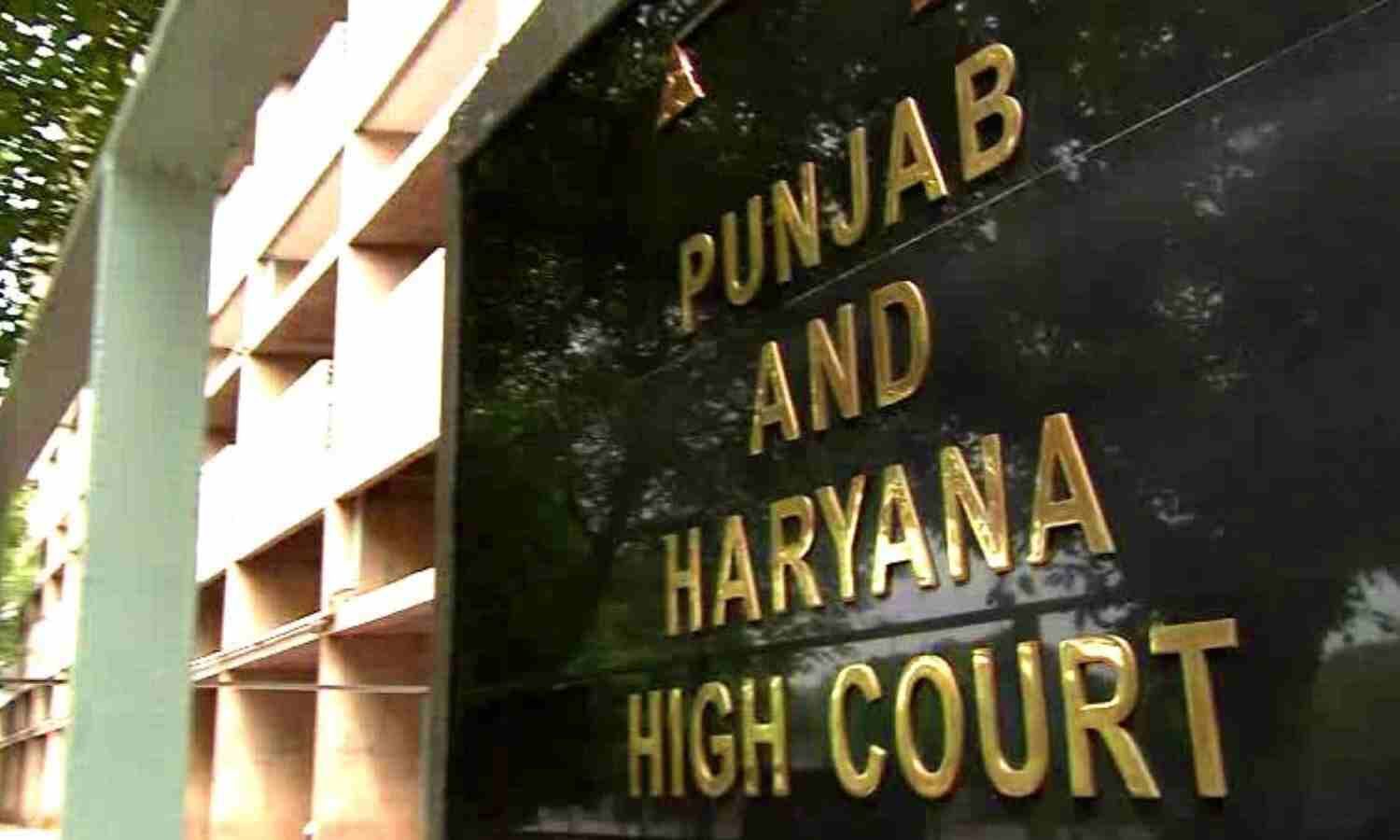
CHANDIGARH — The Punjab & Haryana High Court has issued a landmark ruling condemning the uneven deployment of medical officers under the AYUSH Department of Haryana, firmly stating that public healthcare cannot remain a mere “paper assurance”. Presiding over a public interest petition, Justice Sandeep Moudgil linked public health mismanagement directly to violations of the right to life and health guaranteed under Article 21 of the Constitution of India. The Bench observed that basic healthcare facilities across several rural areas are suffering heavily due to arbitrary posting trends, while urban or preferable stations hold an unjustified surplus of clinicians.
For the medical fraternity in India—which is closely tracking the structural integration of traditional and modern medical systems—this judicial intervention places public health administration under unprecedented scrutiny, setting a legal benchmark for equitable doctor allocation nationwide.
The Crux of the Matter: “Bricks and Mortar” vs. Functional Care
The case arose from a public interest litigation (PIL) titled Satyavati v. State of Haryana and another, which challenged the severe systemic imbalance in the posting of Ayurvedic Medical Officers (AMOs) across government dispensaries and Primary Health Clinics (PHCs).
Upon examining the official affidavits submitted by the state’s AYUSH Department, the High Court recorded a glaring paradox. While multiple urban and well-connected healthcare centres are staffed with an excess of 97 surplus doctors, numerous rural dispensaries and critical PHCs continue to operate either entirely without a medical officer or with severely inadequate staff.
Delivering a sharp rebuke to the administration, Justice Moudgil remarked:
“A hospital deprived of doctors is but a structure of bricks and mortar, incapable of securing the right to life to the citizens.”
The Court emphasized that public health administration cannot function to accommodate the personal comfort of government employees at the expense of the general public.
Summary of Judicial Directives & State Accountability
The High Court’s ruling extends far beyond standard service grievances, positioning the distribution of medical manpower as a core tenet of constitutional morality.
| Key Judicial Metric | Court Observation & Directive |
| Equitable Redistribution Timeline | The Director of the AYUSH Department, Haryana, must execute a requirement-based redistribution of AMOs across all PHCs and dispensaries within two weeks. |
| Staffing Imbalance | Identified a explicit surplus of 97 medical officers at comfortable urban centres while rural posts remain abandoned. |
| Unfilled Vacancies | The state must formally explain why over 600 vacant AMO posts remain completely unfilled, despite recruitment processes supposedly being concluded two years prior. |
| Employee Convenience vs. Public Duty | The Court declared that the “convenience of employees working under the State must yield to constitutional necessity” regarding public welfare. |
| Compliance Deadline | A strict compliance affidavit detailing the redistribution and interim filling of vacancies must be submitted by May 27, 2026. |
Broader Implications for Indian Healthcare and AYUSH Integration
This ruling carries heavy implications for India’s medical infrastructure. Over the past decade, the Government of India has heavily promoted the mainstreaming of AYUSH systems to achieve universal health coverage, relying on AMOs to bridge the severe shortage of allopathic doctors in remote regions. However, the high-level data presented to the Punjab & Haryana High Court reveals that the historic urban-rural divide continues to sabotage these public health goals.
For doctors across India, this judgment serves as an important legal precedent. It asserts that the state holds a legal obligation to ensure that both allopathic and alternative medicine clinicians are deployed where they are epidemiologically needed, rather than where it is politically or personally convenient. By demanding an audit of over 600 vacant positions and stopping the artificial concentration of doctors in specific hubs, the High Court is forcing a systemic change that could redefine rural healthcare delivery models across other states.