Pillars of Hope: Union Home Minister Salutes Selfless Service of Nursing Professionals on Nurses Day
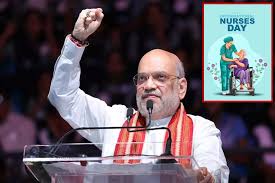
NEW DELHI: Marking the global celebration of International Nurses Day, Union Home Minister Amit Shah extended high praise and gratitude to the nursing fraternity across the country. In a message acknowledging their tireless efforts, the leadership emphasized that the unwavering commitment and selfless service of these medical professionals serve as the true backbone of the national healthcare system. The tribute highlighted that nurses remain constant pillars of hope for patients experiencing vulnerability and distress, reinforcing that the entire country takes immense pride in their ongoing contributions to public welfare.
The administrative praise highlighted the dual role nurses balance daily: providing critical clinical care while serving as the emotional core of hospital ecosystems. The leadership noted that the foundational strength of building a healthy nation relies heavily on the resilience of these frontline workers, whose dedication extends far beyond regular duties. Whether managing high-pressure emergency triage, assisting in intensive surgical procedures, or providing comfort in rural clinics, the nursing workforce serves as a reliable link between institutional medical frameworks and citizen recovery.
Observed annually, the global occasion commemorates the birth anniversary of Florence Nightingale, the historic founder of modern nursing practices. Over the decades, the event has transformed into an essential platform for addressing the structural requirements of the nursing profession. The programmatic theme designated for the 2026 global campaign, “Our Nurses. Our Future. Empowered Nurses Save Lives,” shifts global focus toward the undeniable link between fully optimized public health systems and well-supported healthcare personnel. According to international advocacy briefs, regional health indicators improve significantly when nursing cadres receive competitive remuneration, structured leadership opportunities, and regular access to specialized higher training.
The official statement also acknowledged the historical challenges overcome by healthcare professionals during intense national crises, including pandemic responses and natural disaster management. The leadership remarked that the exceptional sacrifices and courage displayed by clinical teams during stressful historical periods continue to serve as an enduring inspiration for society. Healthcare experts added that the modern responsibilities of the workforce have expanded extensively. A single shift often demands that a nurse manage complex medical charts, coordinate inter-departmental logistics, oversee critical drug administration, and offer psychosocial counseling to worried families.
The national acknowledgment arrives at a time when global public health structures are confronting acute workplace demands. Facilities worldwide are dealing with systemic pressures driven by severe personnel shortages, rising multi-morbidity among aging populations, and environmental emergencies. Public health policy commentators emphasize that national messages of appreciation must be matched by continuous infrastructural investments. Ensuring safe patient-to-staff ratios, creating secure clinical workspaces, and offering specialized training grants are recognized as vital steps to prevent professional burnout and retain experienced nursing talent.
As state capitals and regional medical colleges organize diverse commemorative functions, workshops, and recognition ceremonies to honor local nursing staff, the message from the central government reinforces a strong sense of institutional value. The national leadership concluded by reaffirming its dedication to systematically upgrading working environments, expanding nursing educational institutions, and protecting the welfare of the healthcare workforce.