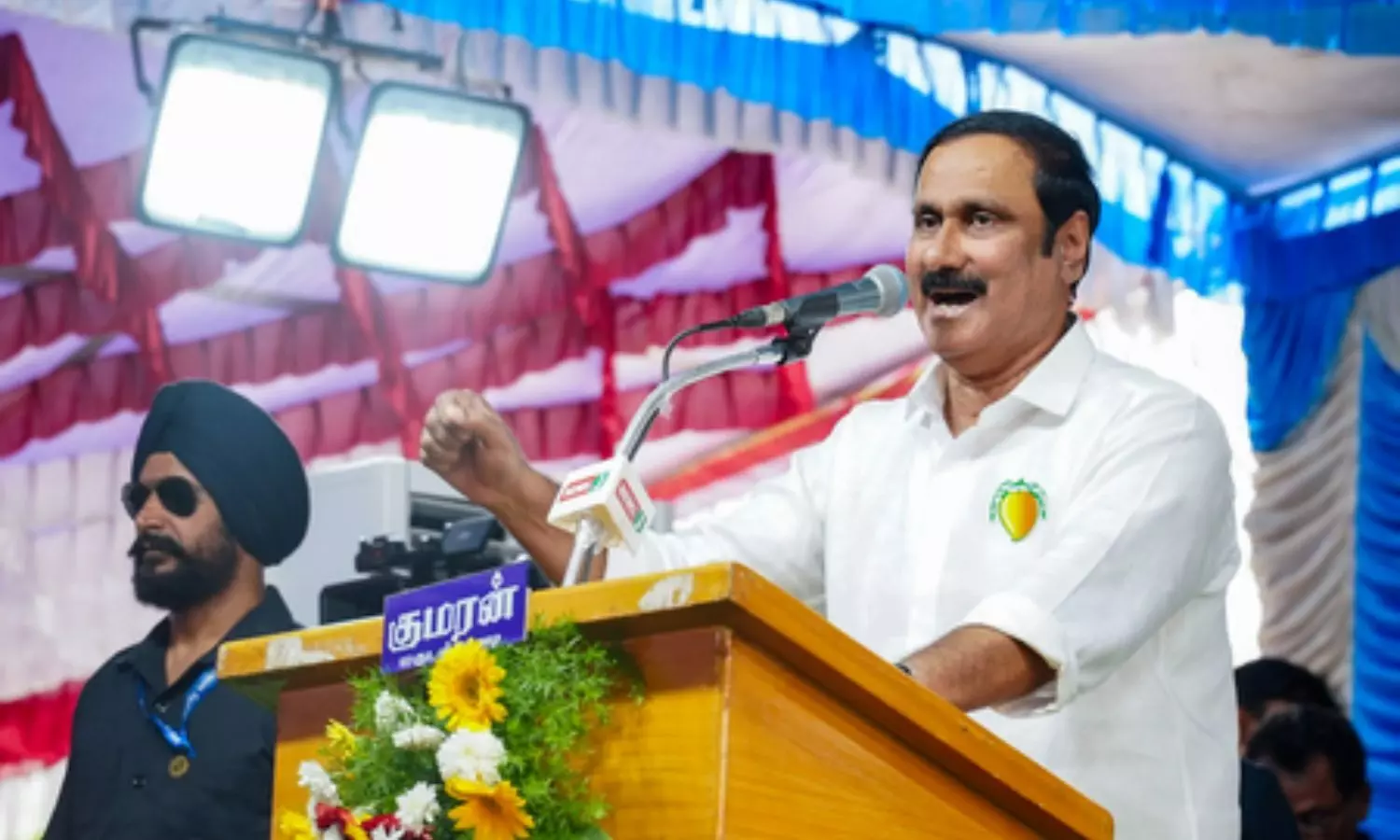
CHENNAI — In a major political development impacting medical postgraduate and super-specialty education across India, Pattali Makkal Katchi (PMK) President and former Union Health Minister Dr. Anbumani Ramadoss has issued a strong directive to the Tamil Nadu state government. He urged the administration to legally challenge the ongoing Supreme Court directions concerning the reversion of vacant in-service super-specialty (DM/M.Ch) seats to the All India Quota (AIQ) pool.
The statement addresses a profound administrative gridlock that has stalled the Medical Counselling Committee’s (MCC) national admissions schedule. It brings to light a deep federalism friction between state-level affirmative policies in public healthcare and centralized medical meritocracies. For physicians, senior residents, and medical institution directors throughout India, this intervention spotlights the volatile intersection of healthcare policy, legal disputes, and the staffing of tertiary medical centers.
[ The NEET-SS Seat Reversion Dispute ]
│
┌──────────────────────────┴──────────────────────────┐
▼ ▼
[State / In-Service Position] [Central / AIQ Position]
• 50% Seats reserved for Govt Doctors • Unfilled seats must revert to All India Pool
• Keep seats within state boundaries • Lock seat matrices until uniform decision
• Protect rural tertiary care pipelines • Prevent precious DM/M.Ch seats from going waste
The Legal Catalyst: The Tamilvani Standoff
The ongoing policy battle is centered around the Supreme Court case Tamilvani & Ors. vs. State of Tamil Nadu (W.P. No. 415 of 2026). Tamil Nadu stands as the lone state in India that actively earmarks 50% of its high-demand super-specialty seats explicitly for in-service government medical officers.
NOTICE
During the standard counseling cycles, out of the state’s 415 super-specialty seats, 215 were strictly reserved for in-service candidates. However, following two rounds of state-level counseling, dozens of complex seats in highly critical sub-specialties—such as cardiothoracic surgery and neurosurgery—remained unallocated due to strict qualifying boundaries.
While the Centre’s Directorate General of Health Services (DGHS) mandates that unfilled state-quota seats must revert to the open, national All India Quota pool to prevent seats from going to waste, Tamil Nadu’s Directorate of Medical Education (DME) refused to surrender them. This state-level freeze prompted an open-market candidate to file a writ petition in the Supreme Court. In response, the apex court ordered a temporary freeze on Round-2 selection processing nationwide.
Dr. Anbumani’s Critique: Defending the Public Healthcare Backbone
Dr. Anbumani Ramadoss, an outspoken advocate for localized reservation architectures, characterized any attempt to strip the state of these unfilled seats as a direct blow to social justice and public health infrastructure.
He argued that if these seats are surrendered to the national pool, the primary purpose of the in-service reservation is defeated. Historically, the state’s policy rationale is that in-service doctors who complete super-specialty training return to serve in government-run medical colleges and rural district headquarters hospitals, acting as the primary line of complex care for lower-income populations.
The Policy Stance: “If we blindly surrender these specialized seats to the All India Quota now, non-service candidates who secure them will have zero long-term bond obligations to serve in the public healthcare systems of Tamil Nadu,” state officials noted in line with PMK’s stance. “If the Centre subsequently lowers the qualifying cutoffs to fill vacancies, our native, in-service doctors lose out on crucial opportunities to upskill.”
Ground Reality: Unemployed Residents and Compromised Wards
While the legal battle plays out in court, the operational impact on the ground across India has grown severe:
| Stakeholder Group | Immediate Clinical & Systemic Consequence |
| Senior Postgraduates (MD/MS) | Hundreds have resigned from institutional posts in anticipation of joining superspecialties, leaving them professionally adrift for months without an active income. |
| Tertiary Care Centers & Teaching MCHs | Facing acute shortages of first-year DM and M.Ch residents, heavily overloading existing clinical teams. |
| Patient Care & Emergency Operations | Delays in elective multi-specialty evaluations as senior resident strength drops in major government medical colleges. |
The Federation of All India Medical Association (FAIMA) has already sent an urgent appeal to the Union Health Ministry. They warned that if the seat matrix deadlock between the state’s retention policy and the Supreme Court’s national pool directives is not broken immediately, the ongoing frustration among young clinicians could escalate into widespread protests.
As the apex court reviews the core arguments of the Tamilvani case, Dr. Anbumani’s demand for a firm legal challenge places the Tamil Nadu government under intense political pressure. The state must now decide whether to seek an alternative legislative pathway or pursue an outright review petition to permanently safeguard the structural boundaries of its state medical service quota.