

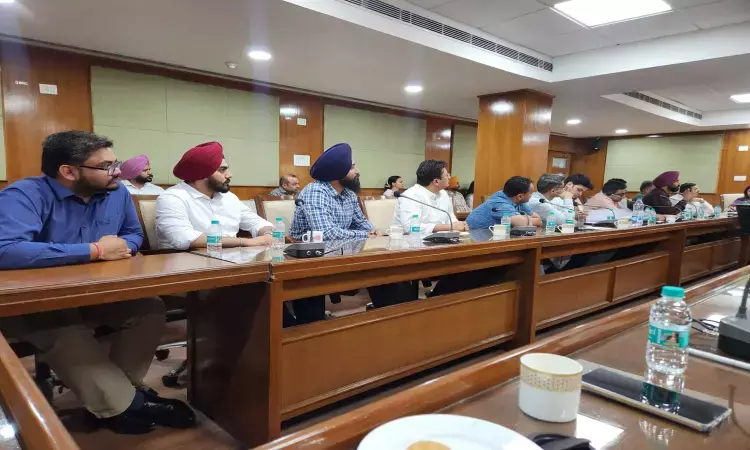
Punjab’s public healthcare system is under strain as the Punjab Civil Medical Services Association (PCMSA) raises alarm over a growing shortage of specialist doctors and delays in regular recruitment, warning of serious implications for patient care across civil hospitals.
Healthcare Services Hit by Specialist Shortage
The association highlighted that the lack of permanent specialists has significantly impacted healthcare delivery in government hospitals. To keep essential departments operational, authorities are increasingly relying on empanelled private practitioners and temporary deputation of doctors.
According to PCMSA, this stop-gap arrangement is neither sustainable nor sufficient to meet the rising healthcare demands of the population.
Government Struggling with Attrition and Low Recruitment
Speaking on the issue, PCMSA President Dr Akhil Sareen pointed out that the government is facing dual challenges—high attrition rates and low intake of new doctors into the public health cadre.
“We currently have two specialists on deputation and two on empanelment basis. This is clearly inadequate. The government is struggling both to retain doctors and to attract new recruits,” he said.
He further stressed that unresolved concerns of doctors from the 2020 onward batches could weaken the backbone of Punjab’s future healthcare workforce if not addressed promptly.
Key Policy Concerns Raised by PCMSA
The association has outlined several pressing issues requiring immediate attention:
- Delay and ambiguity in Modified Assured Career Progression (MACP) pay fixation
- Demand to announce MACP benefits for 2020 onward batches by June 30, 2026
- Rationalisation of pre-2016 postgraduate (PG) allowance
- Reinstatement of Non-Practising Allowance (NPA) during PG courses
- Implementation of Phase-2 security framework in hospitals
- Streamlining administrative approvals (leaves, NOCs, probation, MACP) through the i-HRMS portal
- Pay protection and extension of MACP benefits to RMOs merged into PCMS
- Restoration of entry-level pay to ₹56,100
- Addressing discrepancies in allowances and CME (Continuing Medical Education) requirements
Urgent Call for Policy Action
PCMSA emphasized that timely resolution of these issues is crucial to stabilizing Punjab’s public healthcare system. The association warned that continued delays could further discourage young doctors from joining government service, worsening the already critical shortage.
Dr Sareen reiterated that addressing these concerns without delay is essential to ensure a robust and sustainable healthcare workforce for the state.
Outlook
With rising healthcare demands and increasing dependence on temporary arrangements, the spotlight is now on the Punjab government to expedite recruitment and implement long-pending policy reforms. The coming months will be critical in determining whether these systemic challenges are effectively addressed or continue to strain public health services.

