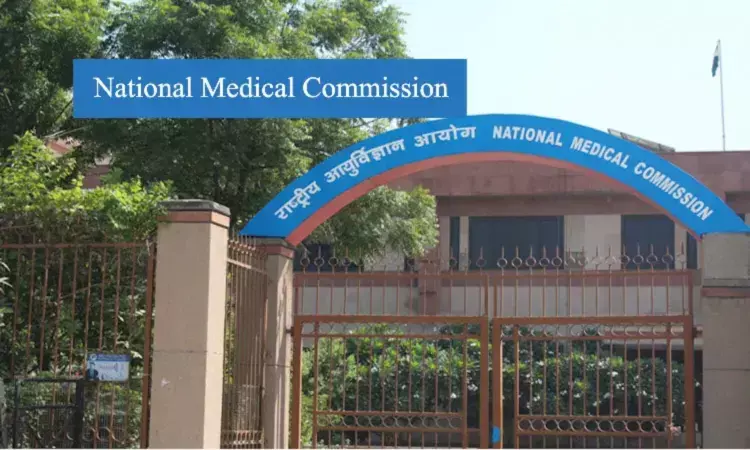
NEW DELHI: A large-scale peaceful demonstration organized outside the National Medical Commission (NMC) headquarters has brought the long-standing administrative challenges faced by Foreign Medical Graduates (FMGs) back into sharp professional focus. Scores of qualified doctor cohorts, acting under the collective leadership of the Democratic Medical Association (DMA) and Global Medicos India (FMG’s Wing), converged in the national capital to demand immediate regulatory relief. The central point of contention involves systemic, prolonged delays in the issuance of Permanent Medical Registrations (PR) by independent State Medical Councils, a roadblock that effectively prevents these doctors from entering clinical practice.
[Varying Interpretations of NMC’s March 18 Public Notice]
│
▼
[Inconsistent Registration Requirements Across State Councils]
│
▼
[Administrative Hurdles: Withheld Registrations & Extended Internships]
│
▼
[NMC-State Council Communication Gap Leaving FMGs In Limbo]
│
▼
[National Protests Triggering Urgent Calls for Centralized Norms]
Inconsistent Frameworks Across State Medical Councils
The primary catalyst for the widespread professional unrest is the highly inconsistent interpretation of central regulatory mandates by localized state medical bodies. Medical leaders representing the Democratic Medical Association noted that despite applicants successfully clearing the Foreign Medical Graduate Examination (FMGE) and completing their mandatory internship timelines, individual states are establishing independent, non-uniform benchmarks.
Specifically, state councils have heavily fragmented their registration processing models following the apex medical commission’s public notices issued earlier. While several states promptly grant permanent registration certificates upon the successful verification of standard one-year clinical rotations, other state councils, such as those in Andhra Pradesh and Maharashtra, have reportedly demanded localized extensions of two to three years. These boards have routinely refused to scientifically clear compensatory online learning or clinical paperwork submitted by applicants. This lack of centralized administrative unity has created a deep legal and professional divide among peer medical graduates based purely on geographic location.
The Regulatory Realities and the Communication Gap
For established medical professionals and healthcare administrators monitoring this policy friction, the core issue stems from an acute structural communication breakdown. During the demonstrations, a senior delegation led by medical association representatives secured a formal audience with top-tier NMC officials to submit an exhaustive grievance dossier.
Following deep negotiations, Apex Commission representatives acknowledged that the primary administrative friction is rooted in a severe communication gap between national directives and state council enforcement mechanisms. Because state-level medical registries function with semi-autonomous executive powers, they frequently hesitate to process files without explicit, individualized clarifications from the central body. In response to the crisis, the NMC has positively committed to circulating fresh, uniform clarifications directly to all state chapters, standardizing verification timelines.
Long-Term Realities for India’s Healthcare Ecosystem
The ongoing bottlenecks in integrating thousands of fully certified, FMGE-qualified doctors hold deep operational risks for the broader Indian healthcare system:
- Artificial Depletion of the Medical Workforce: Withholding permanent certificates from hundreds of verified doctors in major states like Maharashtra creates an immediate shortage of primary resident physicians across tier-2 and tier-3 healthcare networks.
- Compounding Post-Graduate Pipeline Crises: Unreasonable administrative delays in processing registrations put these young professionals at risk of missing strict eligibility windows for upcoming national competitive exams, including NEET PG and INI-CET.
- Exorbitant Financial and Mental Distress: Forcing newly qualified doctors to navigate multi-year unpaid clinical extensions or bureaucratic loops creates severe career stagnation and unnecessary financial strain.
The NMC’s latest intervention brings short-term optimism, but the medical community continues to call for a permanent, digitalized single-window national registry system. Establishing centralized processing is essential to prevent localized state guidelines from superseding national merit and stalling crucial medical talent.