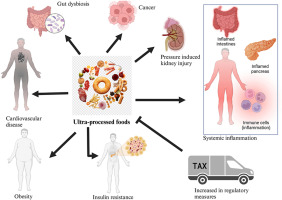
LONDON — A wave of recent clinical data is sounding a global alarm on the contents of modern kitchen cabinets. Beyond the well-known dangers of sugar and salt, a major new clinical consensus from the European Society of Cardiology warns that the sheer level of industrial processing in common foods is directly linked to an increased risk of heart disease, irregular heart rhythms, and premature death.
The report, which synthesises a decade of global research involving millions of participants, suggests that adults with the highest consumption of ultra-processed foods (UPFs) face as much as a 65% higher risk of death from cardiovascular disease compared to those who eat the least. These findings indicate that even foods marketed as “healthy” or “low-fat” may still carry significant risks if they are industrially manufactured with additives and reconstructed ingredients.
A Lethal Ratio in the Modern Diet
Ultra-processed foods—defined by the NOVA classification system as products made primarily from industrial substances with little to no whole-food content—now account for more than half of the daily calorie intake in many Western nations. In the UK, UPFs represent approximately 54% of the diet, while in the United States, they comprise nearly 60%.
The health consequences of this shift are staggering. Research published in The BMJ and the European Heart Journal consistently shows that for every 10% increase in the proportion of UPFs in a person’s diet, the risk of all-cause mortality rises by roughly 10%. Specific conditions linked to high UPF intake include:
- Heart Disease: A 19% increased risk of coronary artery disease.
- Atrial Fibrillation: A 13% higher chance of developing irregular heart rhythms.
- Hypertension: A direct correlation with high blood pressure, even after adjusting for salt intake.
The Biology of Processing
Experts are increasingly convinced that the problem lies not just in “bad nutrients” like trans fats, but in the altered food structure and chemical additives. Industrially processed items often contain emulsifiers, stabilizers, and artificial sweeteners that can disrupt the gut microbiome and trigger chronic systemic inflammation.
“Current medical advice has not fully caught up with the growing evidence,” noted one of the report’s lead authors, emphasizing that focusing solely on calorie counts or individual nutrients ignores the metabolic disruption caused by hyper-palatable, industrially engineered products that promote overeating and insulin dysregulation.
Not All UPFs Are Equal
While the category is broad, certain products pose more immediate threats than others. Long-term studies spanning three decades, including those from the Harvard T.H. Chan School of Public Health, have identified processed meats (like sausages and deli meats) and sugar-sweetened beverages as the most significant drivers of heart disease risk. In contrast, some ultra-processed items like whole-grain breads or certain cereals showed a less pronounced or even neutral association in specific cohorts, suggesting that the type of processing and the quality of the base ingredient still matter.
A Call for Global Reform
In light of these findings, cardiology experts are urging a shift in public health policy. Recommendations include clearer front-of-package labelling to identify highly processed items, taxation on less healthy products, and updated national dietary guidelines that prioritise minimally processed, whole foods.
Doctors are being advised to integrate “UPF screening” into routine check-ups, asking patients specifically about their consumption of ready-meals and packaged snacks as a standard part of cardiovascular risk assessment. As research continues to solidify the causal links, the message from the scientific community is clear: longevity may depend less on counting calories and more on how much of your food was made in a factory.