

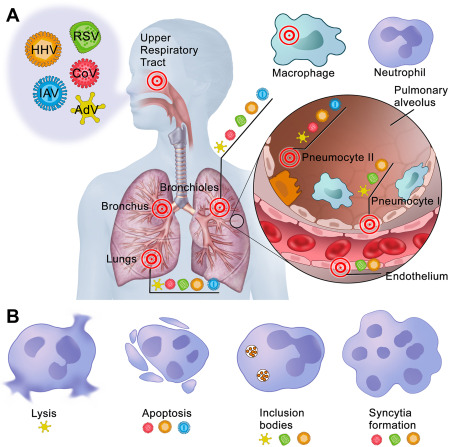
NEW DELHI / MUMBAI — The sudden and tragic demise of 41-year-old NASCAR champion Kyle Busch due to severe pneumonia that progressed into sepsis has sent shockwaves through the global sports fraternity and renewed critical academic discussions within the medical community. For clinicians operating in India—where pneumonia remains a leading cause of hospitalisation and sepsis contributes to a staggering mortality rate in intensive care units—this high-profile case serves as a grim clinical reminder. It underscores how an apparently localised respiratory tract infection can rapidly trigger a catastrophic, dysregulated systemic response, causing multi-organ dysfunction syndrome (MODS) even in younger, highly conditioned individuals.
The Initial Insult: From Upper Respiratory Illness to Alveolar Consolidation
Clinical reports indicate that Busch’s illness began as a routine sinus infection and upper respiratory tract disease before advancing to severe bilateral pneumonia. In typical pathogenesis, when primary upper airway mucosal barriers are breached, pathogens migrate into the lower respiratory tract via micro-aspiration.
Once in the alveoli, the proliferation of microbial agents (frequently bacterial superinfections such as Streptococcus pneumoniae or Staphylococcus aureus following a viral prodrome) initiates a localized immune response. Alveolar macrophages release pro-inflammatory cytokines, including tumor necrosis factor-alpha (TNF-\(\alpha \)), interleukin-1 (IL-1), and interleukin-6 (IL-6). This induces local vasodilation and increased capillary permeability, leading to the accumulation of purulent exudate within the air sacs, severely impeding alveolar-capillary gas exchange.
The Tipping Point: Loss of Compartmentalisation and Cytokine Storm
The transition from a primary pulmonary infection to systemic sepsis hinges on a breakdown of localized compartmentalisation. When the microbial load is extraordinarily virulent or when the host’s innate immune system over-compensates, inflammatory mediators escape the pulmonary microenvironment and flood the systemic circulation.
This systemic spillover marks the initiation of sepsis, defined by the Sepsis-3 criteria as a life-threatening organ dysfunction caused by a dysregulated host response to infection. The immune system effectively goes into an uncoordinated “overdrive.” Rather than clearing the localized pulmonary pathogen, these circulating inflammatory cascades begin targeting healthy endothelium across distant organ beds.
Pathophysiology of Multiorgan Failure
The systemic endothelial injury initiated by the cytokine storm triggers three interconnected pathological processes:
- Diffuse Endothelial Dysfunction: The vascular endothelium loses its semi-permeable integrity. Systemic capillary leaks cause a massive fluid shift into the interstitial space (third-spacing), resulting in severe intravascular volume depletion and profound hypotension.
- Disseminated Intravascular Coagulation (DIC): Pro-inflammatory cytokines activate the extrinsic coagulation pathway while simultaneously impairing natural anticoagulant mechanisms (such as protein C and antithrombin). This drives microvascular thrombosis, occluding capillary beds and cutting off tissue perfusion.
- Mitochondrial Dysfunction: Even when macrovascular blood pressure is partially restored with vasopressors, cells suffer from “cytopathic hypoxia.” Oxidative stress damages mitochondria, leaving cells unable to utilize available oxygen for adenosine triphosphate (ATP) synthesis, accelerating cellular death and organ failure.
In Busch’s case, this culminated in acute respiratory distress syndrome (ARDS), marked by severe dyspnea and hemoptysis, alongside rapid secondary renal and cardiovascular collapse.
The Clinical Trap: Why Young Athletes “Fall Off a Cliff”
A highly instructive aspect of this case for Indian physicians is the patient’s age (41) and athletic profile. Younger, physiologically fit patients possess remarkable cardiovascular reserve and robust compensatory mechanisms. When facing early-stage sepsis, their hearts can dramatically increase stroke volume and heart rate to maintain perfusion to vital organs, masking the classic signs of systemic decline.
They may continue working, or in Busch’s case, operating high-stress racing simulators, while underreporting symptoms like progressive fatigue or a “stubborn cold”. However, when these compensatory metabolic thresholds are finally exhausted, the patient experiences a sudden metabolic failure—clinically termed “falling off a cliff”—progressing from compensation to refractory septic shock and cardiac arrest within a matter of hours.
Actionable Takeaways for Indian Medical Practice
Given the high prevalence of self-medication with over-the-counter antibiotics and steroids in India, early-stage pneumonia is frequently partially masked or inadequately treated, escalating the risk of secondary sepsis.
- Abandon Reliance on Hypotension Alone: In young adults, do not wait for a drop in blood pressure to suspect sepsis. Rely heavily on the Quick Sequential Organ Failure Assessment (qSOFA) or National Early Warning Score (NEWS) metrics, paying close attention to tachypnea (Respiratory Rate \(>22\) breaths/min) and acute alterations in sensorium.
- Enforce the One-Hour Sepsis Bundle: The moment sepsis is suspected, the clock begins. Immediate protocols must dictate: draw blood cultures, measure serum lactate levels, administer empirical broad-spectrum intravenous antibiotics, and initiate aggressive crystalloid fluid resuscitation (\(30\text{ mL/kg}\)) if hypoperfusion is evident.
- Aggressive Public and Patient Education: Clinicians must counsel patients that pushing through severe respiratory symptoms, persistent high fevers, or producing blood in sputum requires immediate emergency evaluation rather than ambulatory care or domestic rest.
