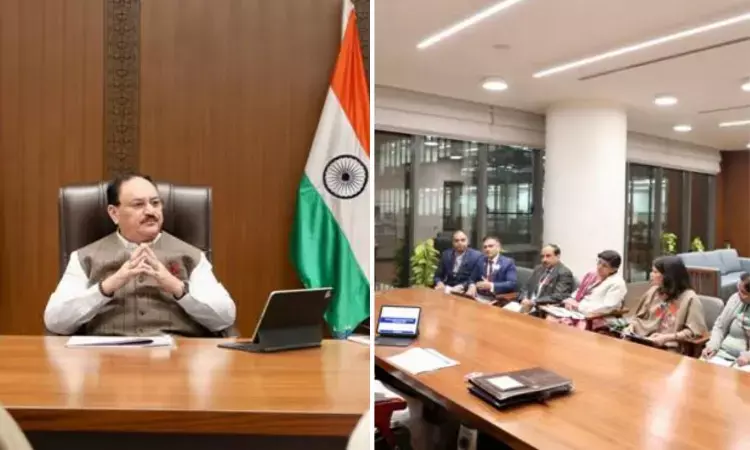
New Delhi: With the winter season approaching and influenza activity expected to rise, Union Health & Family Welfare and Chemicals & Fertilisers Minister Shri JP Nadda chaired a high-level review meeting to assess national preparedness. The meeting focused on surveillance, existing strain patterns, and hospital readiness across the country.
Senior Health Officials Participate in Review
Top officials including Health Secretary Smt. Punya Salila Srivastava, Director General of Health Services Dr. Sunita Sharma, Joint Secretary (Public Health) Smt. Vandana Jain, NCDC Director Prof. (Dr.) Ranjan Das, and experts from the Disaster Management Cell and Integrated Disease Surveillance Programme (IDSP) attended the meeting. The review took place at Kartavya Bhawan 1.
India’s Seasonal Influenza Trends Explained
According to a PIB statement, the Union Health Secretary briefed the Minister that India experiences two major influenza peaks each year—during August to October, which marks the monsoon-linked rise, and during January to March, which signifies the winter surge. These recurring patterns help in forecasting healthcare needs during the season.
Minister Seeks Clarity on Circulating Strains
Recalling the sharp spike in influenza cases witnessed in 2014–15, Shri Nadda sought details on the current strain circulation and whether any unusual variations had emerged. Officials from the NCDC and IDSP informed him that influenza activity remains low both globally and domestically.
Seasonal Strains Continue to Dominate
Experts reported that the currently circulating strains are typical seasonal variants—H3N2 and Influenza B (Victoria)—with a smaller proportion of H1N1 also present. They confirmed that no abnormal trends or unexpected viral behaviours have been detected so far through the ongoing surveillance systems.
Real-Time Surveillance Shows No Unusual Surge
The Minister was briefed about the multiple surveillance mechanisms in place, including IDSP’s Influenza-Like Illness (ILI) and Severe Acute Respiratory Illness (SARI) monitoring network, AI-driven event-based surveillance through media scanning, and ICMR’s sentinel monitoring for respiratory pathogens. All systems currently indicate stable and expected levels of influenza activity.
National ‘Chintan Shivir on Influenza’ Planned
NCDC Director Prof. (Dr.) Ranjan Das informed that the agency will convene a two-day national ‘Chintan Shivir on Influenza’ later this month. The session will bring together ministries, departments and state representatives to evaluate preparedness measures and formulate future strategies for influenza management.
Minister Directs States to Strengthen Preparedness
Shri Nadda commended ongoing preparedness efforts and emphasised the need for coordinated action across states. He directed officials to conduct a detailed review with state nodal officers and ensure readiness across all Central Government Hospitals. He further instructed that preparedness assessments of district hospitals and medical colleges be completed within two weeks, and advised issuing an advisory to all States and Union Territories along with conducting regular mock drills in health facilities.