

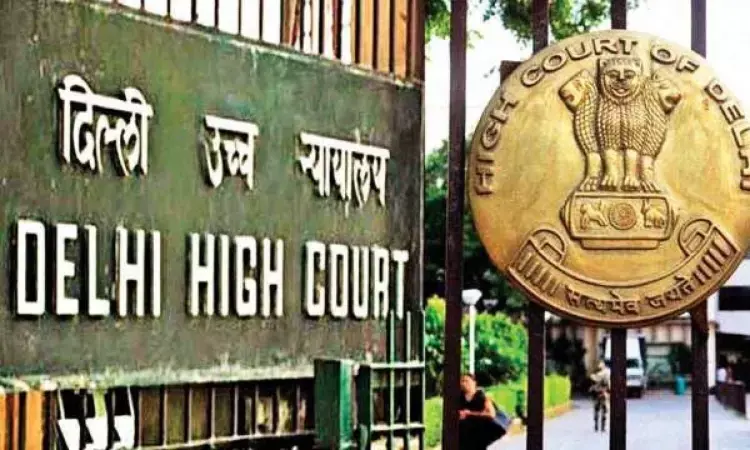
The Delhi High Court has held that Indian students who obtain medical education across multiple foreign medical institutions cannot be treated as eligible to appear in the Foreign Medical Graduates Examination (FMGE). The Court observed that such fragmented medical education could compromise the quality of medical professionals and denied relief to foreign medical graduates whose studies were disrupted by circumstances including COVID-19, the Russia-Ukraine war and personal reasons.
The bench comprising Chief Justice Devendra Kumar Upadhyaya and Justice Tejas Karia also upheld the requirement for authentication of foreign medical degrees and agreed with the National Board of Examinations (NBE) that the petitioners could not rely on an alternative Primary Medical Qualification (PMQ) issued for the same period of study by another foreign institution.
Students Had Shifted Between Foreign Medical Institutions
The petitioners had initially enrolled in different foreign medical institutes but later transferred to other institutions due to circumstances including civil war, the COVID-19 pandemic, the Russia-Ukraine war and personal reasons. In 2020, they approached Micronesia Medical College to complete their medical studies, after which the institution issued the required certificate.
The students subsequently applied for the Screening Test in June 2023 but were declared ineligible. They later approached Belize Medical University and undertook an additional course based on their scorecard from Micronesia Medical College. Belize Medical University issued a certificate dated October 13, 2023, validating the medical degree awarded by Micronesia Medical College under an MOU between the two institutions dated April 19, 2021.
When the petitioners applied for the December 2023 FMGE, they were again denied participation by the NBE. The authority stated that they had submitted an alternative PMQ certificate instead of the original degree certificate from the medical college for the same period of study, which was insufficient to establish their eligibility.
Petitioners Challenged FMGE Eligibility Rules
The students approached the Delhi High Court challenging the denial of their request to appear in the FMGE. They sought a declaration that Regulation 4(1) of the Screening Test Regulations, 2002, inserted through a notification dated September 26, 2009, was ultra vires and unconstitutional.
They argued that Micronesia Medical College was included in the World Directory of Medical Schools published by the World Health Organization and that the amended regulation prevented them from being recognised as eligible to take the Screening Test. They also challenged Clause 2.14 of the NBEMS Information Bulletin, which requires a foreign medical degree to be attested by the Embassy of India or apostilled by the appropriate authority of the concerned foreign country.
The petitioners further challenged a communication dated May 14, 2025, issued by the Deputy Director (Medical), Department of Examination Conduct of the NBE, stating that candidates who submitted an alternative PMQ in place of degree certificates from New Tokyo Medical College, Federated States of Micronesia, would not be considered eligible for the FMGE.
NMC Raised Concerns Over Training and PMQ Authentication
The National Medical Commission (NMC) relied on an affidavit filed by the Ministry of External Affairs, which stated that Embassy officials had visited Micronesia Medical College in 2023. According to the affidavit, the officials found grossly inadequate infrastructure, including a namesake laboratory, lack of proper faculty and institutional arrangements, while the institution was operating from a floor of an old building. The NMC argued that these circumstances justified requiring confirmation of the PMQ by the Indian Embassy.
The NMC also referred to public notices and circulars dated August 8, 2023, November 22, 2024 and July 21, 2025, stating that Indian students had been advised against taking admission at Belize Medical University. It argued that the qualification subsequently obtained from that university could not make the petitioners eligible for the FMGE.
The Commission further submitted that the petitioners had pursued their medical education at multiple institutes and could not use a PMQ issued by Belize Medical University to overcome deficiencies arising from their fragmented education. Referring to the Foreign Medical Graduate Licentiate Regulations, 2021, the NMC submitted that a valid PMQ requires theory, practical and clinical training equivalent to an Indian MBBS course and completion of a 12-month internship at the same foreign institution from which the PMQ was obtained.
NBE Questioned Alternative Qualification From Belize University
The NMC argued before the Court that an MOU between Micronesia Medical College and Belize Medical University could not be treated as authorising validation of a PMQ or creation of an alternative qualification for meeting FMGE eligibility requirements.
The NBE also relied on an advisory on medical education in the Federated States of Micronesia issued by the Embassy of India in Manila. The advisory stated that although the Embassy had sought relevant information about Micronesia Medical College from the Government of the Federated States of Micronesia, no response had been received. Consequently, the Embassy stated that it would not be in a position to authenticate degrees or other educational documents issued by the institution.
According to the NBE, the petitioners had produced a PMQ from Belize Medical University in substitution for the qualification originally obtained from Micronesia Medical College for the same period of study. It argued that, regardless of the attestation or authentication accompanying the subsequent qualification, the certificate could not establish eligibility for the FMGE.
Delhi High Court Upholds Regulatory Framework
While examining the challenge to Regulation 4(1) of the Screening Test Regulations, 2002, the High Court referred to Section 13(4A) of the Indian Medical Council Act, 1956. The provision requires an Indian citizen holding a medical qualification from an institution outside India to qualify the prescribed Screening Test before being enrolled on a medical register.
The Court noted that the statutory framework empowered the medical regulator to frame regulations governing the Screening Test and medical education. It held that the exclusion of certain institutions through the September 26, 2009 amendment was based on relevant considerations and the experience of the expert regulatory body in overseeing medical education. The bench therefore found no reason to interfere with the regulation.
The Court also noted that the petitioners had applied for the FMGE in June 2023 without challenging Clause 2.14 of the Information Bulletin. They raised the challenge only after being declared ineligible through the communication dated May 14, 2025. The bench held that such a challenge was not maintainable.
Court Upholds Degree Attestation and Apostille Requirement
The bench found no reason to interfere with Clause 2.14, which requires foreign medical degrees to be attested by the Embassy of India or apostilled by the appropriate authority of the concerned foreign country. The Court held that the requirement was consistent with Regulation 4(1) of the Screening Regulations, 2002.
According to the Court, authentication is intended to verify the medical qualification submitted by a candidate and enables the examination authority to prevent candidates from appearing on the basis of fake or false educational documents. The bench therefore held that requiring embassy authentication or apostillation under the Hague Convention dated October 5, 1961, did not cause prejudice to eligible candidates.
Court Agrees With NBE on Fragmented Studies
The High Court also examined the NBE communication dated May 14, 2025, which relied on the September 15, 2023 advisory issued by the Embassy of India in Manila. The Court accepted the explanation that the Embassy could not authenticate documents from Micronesia Medical College because the Government of the Federated States of Micronesia had not responded to its request for information.
The bench noted that the petitioners had initially relied on a medical qualification certificate issued by Micronesia Medical College when applying for the June 2023 FMGE. In the December 2023 examination, they instead submitted a PMQ issued by Belize Medical University for the same period of study.
The Court agreed with the NBE that the use of certificates from two different foreign medical institutions for the same period reflected fragmented medical education and could not establish eligibility for the FMGE. It held that treating such fragmented study as an eligible PMQ would compromise the quality of medical professionals and would not be in the public interest.
Supreme Court Precedent Also Considered
While dismissing the petition, the bench referred to the Supreme Court’s order in Yash Ahuja and Others v. Medical Council of India & Ors. The Supreme Court had observed that the Screening Test was introduced to address large-scale irregularities arising from the commercialisation of medical education and to prevent certification of doctors lacking adequate training or eligibility standards from treating patients in India.
The Delhi High Court consequently dismissed the plea and declined to grant relief to the petitioner foreign medical graduates.
Important Highlights
- Delhi High Court held that fragmented medical education across multiple foreign institutions does not make candidates eligible for FMGE.
- The petitioners had studied at foreign medical institutions including Micronesia Medical College and later relied on a PMQ from Belize Medical University.
- The Court upheld Regulation 4(1) of the Screening Test Regulations, 2002.
- The Court upheld the requirement for embassy attestation or apostillation of foreign medical degrees.
- The bench agreed that certificates from different institutions covering the same period of study could not establish a valid PMQ for FMGE eligibility.
- The Court relied on the principle that the Screening Test is intended to prevent inadequately trained medical graduates from practising in India.