

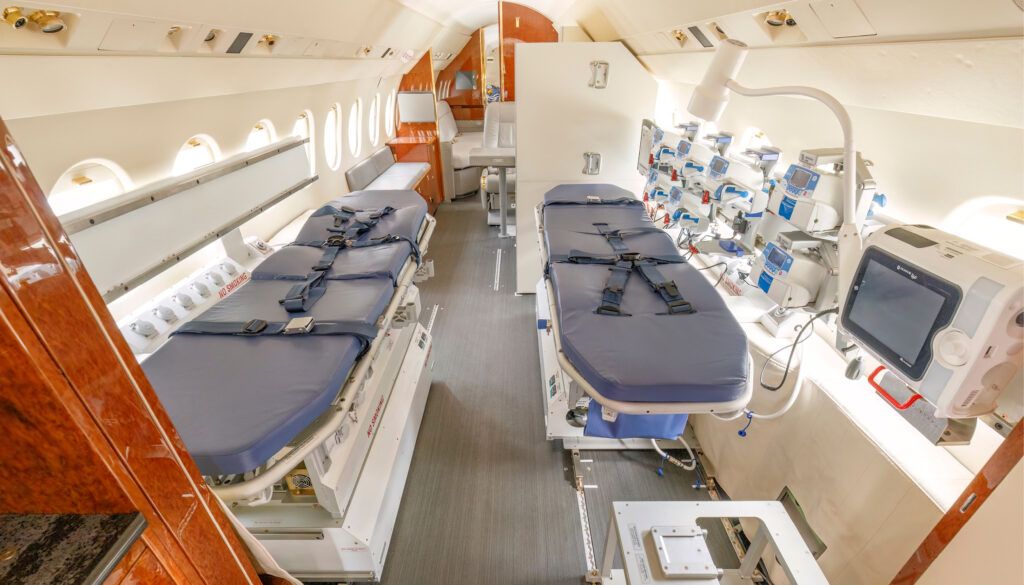
MUMBAI — The successful execution of multiple ultra-long-haul medical evacuations in recent months has cast a spotlight on the rapidly growing demand for intercontinental Intensive Care Unit (ICU) air ambulance services. As globalisation connects families, workforces, and travelers across vast distances, the necessity to transport critically ill or highly unstable patients across oceans and continents has transitioned from a rare luxury to an essential pillar of specialized modern emergency medicine. These sophisticated operations involve flying full-fledged, high-tech intensive care units across multiple time zones, demonstrating that geographic boundaries are no longer a barrier to accessing life-saving healthcare.
The Mechanical and Clinical Marvel of Flying ICUs
Conducting a medical evacuation over thousands of nautical miles is a complex task that combines advanced aviation logistics with specialized critical care medicine. Unlike domestic or short-haul medical flights, intercontinental transfers require specialized long-range aircraft, such as customized Bombardier Learjets or Gulfstream jets, modified specifically to serve as mobile hospital wards. These aircraft are permanently outfitted with state-of-the-art medical hardware, including advanced mechanical ventilators, real-time multi-channel physiological monitors, integrated arterial line systems, volumetric infusion pumps, and portable point-of-care laboratory diagnostic tools.
The medical teams on board—typically consisting of highly trained critical care physicians, flight nurses, and specialized respiratory therapists—must handle intense physiological challenges during transit. Factors such as changes in cabin altitude, shifts in barometric pressure, vibrations, and prolonged acceleration forces can directly impact a patient’s respiratory system, intracranial pressure, and cardiovascular stability. Managing these risks demands extensive specialized training in aerospace medicine, ensuring that a patient suffering from multi-organ failure or severe neurological trauma remains perfectly stabilized while flying at 40,000 feet.
Unpacking the Drivers Behind the Growing Demand
Several global factors are driving the sharp increase in requests for trans-continental medical flights. A primary catalyst is the rise in international travel and global corporate relocation. When specialized expatriates or senior citizens face sudden, life-threatening medical emergencies—such as severe strokes, complex cardiac arrests, or polytrauma from major accidents—in regions with underdeveloped or overloaded healthcare infrastructure, an immediate intercontinental evacuation to a premier global medical destination becomes their only viable path to survival.
Furthermore, the growing concentration of highly specialized medical treatments has altered how families approach critical illness. Whether it is a patient requiring an urgent organ transplant, advanced oncology trial regimens, or highly specialized pediatric surgeries available only at a handful of elite global medical centers, families are increasingly willing to invest in long-haul medical transit. The goal is no longer just moving a patient to the nearest hospital, but safely delivering them directly into the hands of specialized medical experts half a world away.
The Invisible Web of Global Logistics
Beyond the clinical challenges, the success of an intercontinental air ambulance mission depends heavily on a complex network of international permissions, diplomatic clearances, and ground logistics. A single cross-continental flight requires securing urgent overflight permits from multiple civil aviation authorities, managing precise mid-route refueling stops at international airports, and coordinating seamless runway transfers with waiting ground ambulance crews.
Flight operations teams work around the clock to track fast-changing weather systems, secure rapid-turnaround medical visas for traveling family members, and manage linguistic differences between the dispatching and receiving hospital teams. This seamless connection ensures continuity of care, meaning the patient’s treatment plan remains completely uninterrupted from the moment they leave their bed at the originating hospital until they are safely admitted into the destination ICU.
As global populations age and international mobility continues to hit new highs, industry experts predict that the reliance on intercontinental medical evacuations will continue to grow exponentially. This ongoing expansion highlights an urgent need for closer collaboration between international civil aviation bodies and global healthcare networks to streamline emergency flight approvals, standardise cross-border medical protocols, and make life-saving long-haul medical transport more accessible and responsive during sudden, time-critical global medical emergencies.
