

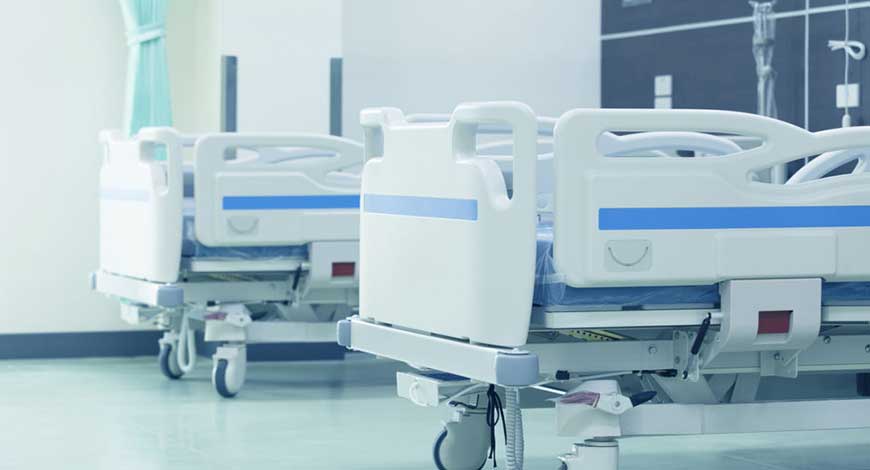
NEW DELHI, INDIA — Organized healthcare networks across India face a critical, structural shortage of tertiary care hospital beds. This capacity deficit is clashing directly with an unprecedented spike in patient demand for advanced, sub-specialty medical treatments. According to updated statistics released by top industry executives, including Max Healthcare Institute Chairman and Managing Director Abhay Soi, India operates with fewer than 100,000 organized tertiary care beds across the entire nation. For a population exceeding 1.4 billion people, this staggering deficit creates an intense infrastructure bottleneck. It forces clinicians to manage severe waiting lists for life-saving oncological, cardiothoracic, and neurosurgical procedures.
+————————————+————————-+—————————————-+
| International Healthcare Metric | Current Indian Average | Global Median / Recommended Benchmark |
+————————————+————————-+—————————————-+
| Overall Hospital Bed Density | 1.3 to 1.5 per 1,000 | 3.0 per 1,000 (WHO Target Baseline) |
| Organized Private Tertiary Beds | < 100,000 Nationwide | Deficit exceeds 2.4 Million Beds |
| National Healthcare Capex Phase | ₹300 to ₹320 Billion | Targeting 14,500 New Beds (2026-2028) |
| Public Health Allocation (% GDP) | ~0.5% of National GDP | 2.5% Target under NHP 2017 Framework |
+————————————+————————-+—————————————-+
Drivers of the Surge: Epidemic of NCDs and Public Schemes
The acute strain on Indian super-specialty wards stems from a combination of changing disease patterns and expanded financial access. Non-communicable diseases (NCDs)—such as advanced cardiovascular disease, end-stage renal disease, and aggressive malignancies—are rising quickly across both urban and rural demographics.
Concurrently, public insurance initiatives like the Ayushman Bharat Pradhan Mantri Jan Arogya Yojana (AB-PMJAY) have systematically lowered financial barriers to entry for millions of historically underserved citizens. This mass integration, paired with a growing middle class that prioritizes institutionalized care, has triggered massive patient volume. This volume is overwhelming existing intermediate and intensive care units (ICUs).
Capital Injection vs. The Looming Human Resource Crisis
In a direct attempt to capitalize on this demand and bridge the gap, India’s listed corporate hospital chains have embarked on a historic capital expenditure cycle. Major health syndicates are deploying ₹300 to ₹320 billion to construct and bring online roughly 14,500 super-specialty beds within the next 24 months.
[Exploding NCD Patient Burden & PM-JAY Volumes]
│
▼
[₹320 Billion Capital Influx Adding 14,500 Beds]
│
▼
[NBCS 2026 Vertical Building Rules Eased]
│
▼
[CRITICAL BOTTLENECK: Acute Lack of Senior DM/MCh Specialists]
However, senior medical directors warn that adding physical beds is only a partial solution. The more severe and unaddressed issue is a national shortage of highly qualified doctors, intensivists, and super-specialist nursing teams. While India has rapidly increased its entry-level MBBS and postgraduate MD/MS slots, the pipeline for experienced, board-certified super-specialists (DM and MCh) remains long and highly constrained.
Regulatory Lifelines: Taller Hospitals and Real-Time Portals
To ease construction bottlenecks in dense urban zones where land costs are prohibitive, the government recently introduced the revised National Building Construction Standards (NBCS) 2026. Strongly supported by the healthcare federation NATHEALTH, these new rules eliminate previous height caps. Crucially, they permit hospitals to establish critical ICUs above 45 metres, provided they implement advanced, vertical fire-safety protocols.
Simultaneously, leading public health researchers argue that building new facilities cannot be the only path forward. They advocate for the nationwide implementation of automated, real-time bed-tracking dashboards. These systems, modeled after specialized frameworks used at institutions like AIG Hospitals in Hyderabad, allow administrative teams to optimize existing bed turnover. They can also help coordinate emergency patient transfers more efficiently, maximizing the utility of India’s current medical infrastructure.
