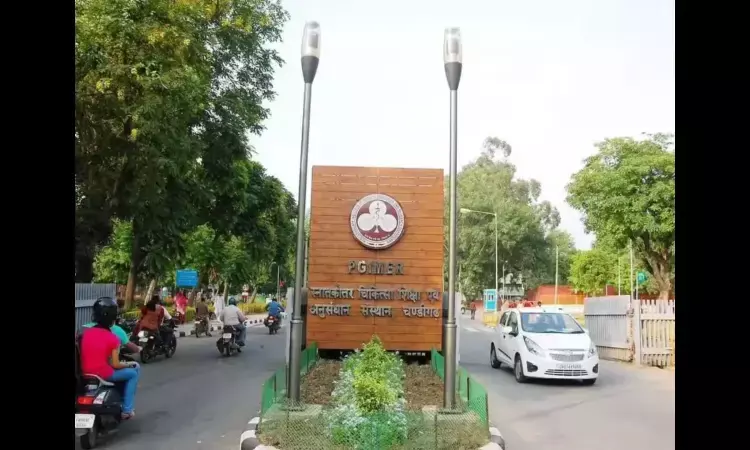
In a groundbreaking medical advancement, the Post Graduate Institute of Medical Education and Research has introduced the world’s first technique for precise management of chronic musculoskeletal pain using Fluorine-18 Sodium Fluoride (¹⁸F-NaF) PET-CT-guided steroid injections. This innovation is being hailed as a major leap toward personalized and targeted pain therapy.
Multidisciplinary Team Behind the Breakthrough
The pioneering technique has been developed by a team of experts including Dr Aneesh Bhattacharya, Dr Sarvdeep Singh Dhatt, Dr Babita Ghai, Dr Rajender Kumar, Dr Vishal Kumar, Dr Harmandeep Singh, and Dr Raza Abbas Mahdi.
Their collaborative effort integrates nuclear medicine, orthopedics, and anesthesiology to deliver highly accurate pain treatment.
How the Technique Works
Unlike conventional imaging, the NaF PET-CT scan identifies metabolically active disease sites—pinpointing the exact source of pain. Once identified, a targeted steroid injection is administered directly at the pain-generating site under real-time PET-CT guidance, further enhanced by robotic precision.
This approach significantly improves treatment outcomes by eliminating guesswork and ensuring therapy is delivered exactly where needed.
Affordable and Accessible Pain Treatment
The procedure is designed to be cost-effective, with an estimated cost of around ₹1,000 and consumables costing approximately ₹500. Patients can access the treatment within 1–2 weeks of referral, making it both affordable and timely for those suffering from chronic pain.
Backed by Strong Clinical Evidence
The innovation is supported by clinical research published in the European Journal of Nuclear Medicine and Molecular Imaging (2026). The study highlights the efficacy and safety of PET-CT guided intra-articular blocks for conditions like lumbar facet joint and sacroiliac joint arthropathy.
New Hope for Chronic Pain Patients
This technique offers promising results for patients suffering from conditions such as lumbar facet joint arthropathy, sacroiliitis, plantar fasciitis, Achilles tendinitis, and coccydynia—ailments that often remain difficult to treat with traditional imaging and therapies.
Leadership Applauds Innovation
PGIMER Director Prof Vivek Lal praised the development, stating that the innovation reflects the institute’s commitment to patient-centric care and clinical excellence. He emphasized that combining advanced imaging with targeted therapy could transform chronic pain management globally while remaining affordable.
A Step Toward Precision Medicine
Experts involved in the project noted that the idea stemmed from a need to improve patient outcomes beyond conventional approaches. By leveraging cutting-edge imaging and robotic assistance, this breakthrough sets a new benchmark in precision medicine and pain management.
This innovation from PGIMER Chandigarh positions India at the forefront of global advancements in chronic pain treatment, offering a highly effective, precise, and accessible solution for millions of patients.