New Delhi/Nagpur | Strengthening India’s Pandemic Preparedness Through Integrated Health Systems
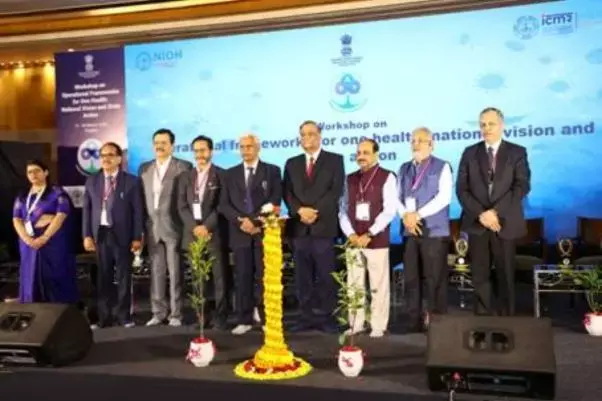
A two-day national workshop on “Operational Frameworks for One Health: National Vision and State Action” was successfully organised by the National Institute of One Health in collaboration with the ICMR-Regional Medical Research Centre. The initiative, held under the Department of Health Research, Ministry of Health and Family Welfare, aimed at translating the National One Health Mission (NOHM) into practical strategies for implementation at state and local levels.
Focus on Coordinated Health Strategy
The workshop brought together policymakers, scientists, and health experts to discuss ways to operationalise the One Health approach—integrating human, animal, and environmental health systems. The objective was to enhance coordination across sectors and improve early detection and response to emerging health threats.
Keynote Highlights: Call for Integrated Surveillance
Delivering the keynote address, Ajay Sood emphasized the urgent need for unified surveillance systems. He highlighted that One Health is critical for national health security and future pandemic preparedness.
According to him, India must move beyond parallel systems of human health, veterinary monitoring, and environmental intelligence towards an interoperable framework that enables seamless data sharing and early warning mechanisms. He also noted that Maharashtra has the potential to become a model state for implementing structured One Health strategies.
Government Stresses Inter-Sectoral Coordination
In his virtual address, Rajiv Bahl underlined the importance of collaboration among government departments, scientific institutions, and technical partners. He described the National One Health Mission as a “whole-of-government” approach to tackling zoonotic diseases and strengthening pandemic readiness.
He further stressed the need to establish state and district-level outbreak response teams to effectively manage health risks arising from human-animal-environment interactions.
Participation of Leading Institutions and Experts
The inaugural session witnessed participation from several prominent dignitaries, including Niteen Patil, Prashant P. Joshi, and Ranjan Das. Senior officials and experts from animal husbandry, public health, and environmental sectors also contributed to the discussions.
Technical Sessions on Zoonotic Diseases and Biothreats
The workshop featured extensive technical sessions focusing on zoonotic diseases, spillover risks, and operational challenges in implementing the One Health framework.
- Day 1: Panel discussions on integrating surveillance systems and strengthening coordination mechanisms.
- Day 2: Sessions on biothreat preparedness, development of medical countermeasures, and investigation of wildlife-related disease outbreaks.
Strengthening India’s Health Security Framework
The workshop marks a significant step towards building a robust, integrated health security system in India. By aligning policy, science, and governance, the One Health approach aims to ensure early detection of threats and a faster, coordinated response to future pandemics.
With increasing risks from zoonotic diseases and environmental changes, the National One Health Mission is expected to play a crucial role in safeguarding public health and enhancing India’s preparedness against global health challenges.