

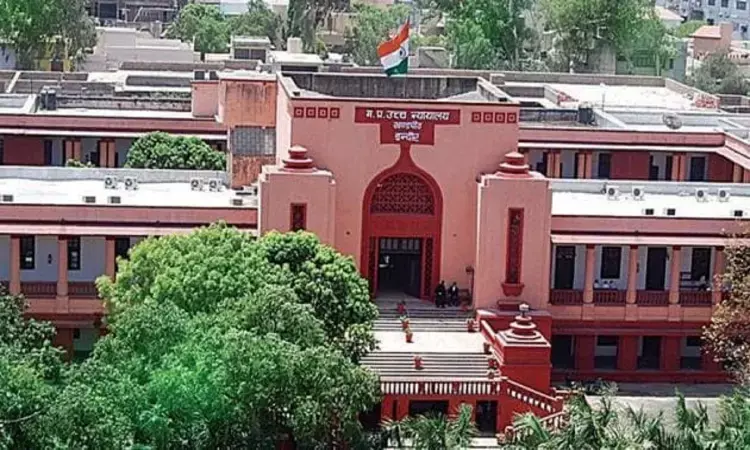
PIL alleges resident doctors in Madhya Pradesh are forced to work up to 36-hour continuous shifts and 100-hour work weeks, seeks implementation of Uniform Residency Scheme
A Public Interest Litigation (PIL) has been filed before the Indore Bench of the Madhya Pradesh High Court seeking strict implementation of the 1992 Uniform Residency Scheme across all government and private medical colleges in the state, alleging that resident doctors are routinely subjected to inhuman duty hours far exceeding the prescribed limits.
The petition seeks directions to ensure that resident doctors are not compelled to work beyond 12 hours per day or 48 hours per week, in accordance with the 1992 Residency Scheme notified by the Union Ministry of Health and Family Welfare following directions of the Supreme Court.
PIL Seeks Uniform Duty Hours, Weekly Off and Grievance Redressal
Filed by medical education activist Rishabh Jaiswal, the petition requests the High Court to direct all medical colleges in Madhya Pradesh to:
- Strictly implement the 1992 Uniform Residency Scheme.
- Limit resident doctors’ duty hours to 12 hours per day and 48 hours per week.
- Ensure a mandatory 12-hour rest period after continuous duty.
- Prepare and publicly display monthly duty rosters.
- Provide mandatory weekly holidays and institutional leave rosters.
- Establish grievance redressal mechanisms with protection against retaliation for complainants.
- Fix accountability for violations of duty hour norms.
Petitioner Alleges Widespread Violation of Supreme Court Directions
According to the petition, the Supreme Court, in Dr. Dinesh Kumar & Others vs. Motilal Nehru Medical College, directed all states and medical institutions to implement a Uniform Central Residency Scheme by 1993.
Pursuant to the judgment, the Union Health Ministry issued a notification on June 5, 1992, mandating that resident doctors should not normally perform continuous active duty exceeding 12 hours or 48 hours per week, along with provisions for weekly holidays and annual leave.
The petitioner argued that despite these binding directions, several medical colleges in Madhya Pradesh continue to compel resident doctors to work 24 to 36 continuous hours without adequate rest, food or sanitation facilities.
RTI Reveals Alleged 36-Hour Continuous Duty
To substantiate the allegations, the petitioner obtained duty rosters through the Right to Information (RTI) Act from MGM Medical College, Indore.
According to the petition, the duty rosters reveal that resident doctors perform regular shifts from 8:00 AM to 8:00 PM, along with 8–9 night duties each month.
The petition alleges that doctors frequently perform a 12-hour night shift (8 PM–8 AM) immediately followed by a 12-hour day shift (8 AM–8 PM), resulting in continuous 36-hour duty stretches without rest.
It further claims that resident doctors receive no weekly holidays, and any leave is contingent upon arranging a replacement colleague, effectively denying genuine time off.
Excessive Duty Hours Linked to Burnout and Patient Safety Concerns
The plea states that resident doctors in Madhya Pradesh often work 70 to 100 hours per week, significantly exceeding the prescribed 48-hour limit.
The petitioner argues that prolonged sleep deprivation impairs cognitive function and increases the likelihood of diagnostic and procedural errors, posing risks to both doctors and patients.
The petition also refers to information received from the National Medical Commission (NMC) through RTI, stating that 1,166 postgraduate medical students left their seats and 119 postgraduate students died by suicide between 2018 and 2023.
Petitioner Cites Constitutional Violations
The petition contends that excessive working hours violate the fundamental rights of resident doctors under Articles 14, 19, 21 and 23 of the Constitution of India.
It also relies on the Supreme Court’s judgment in Bandhua Mukti Morcha vs. Union of India, arguing that the right to life under Article 21 includes the right to live with dignity and humane working conditions.
According to the plea, compelling doctors to perform prolonged duty without adequate rest amounts to inhuman and degrading treatment.
Advocate and Petitioner Demand Immediate Implementation
Counsel for the petitioner, Advocate Amit Patel, said the 1992 Residency Scheme must be implemented in both letter and spirit across all medical colleges, adding that humane working hours and mandatory weekly holidays are essential to protect the dignity, health and constitutional rights of resident doctors.
Petitioner Rishabh Jaiswal stated that resident doctors should not be treated as bonded labour and stressed that reducing burnout through a 48-hour work week, humane duty hours and mandatory weekly offs is critical for both doctors’ well-being and patient safety.
Similar Matter Pending Before Supreme Court
The High Court petition comes amid an ongoing Public Interest Litigation before the Supreme Court, filed by the United Doctors’ Front (UDF), challenging the alleged exploitative working conditions of resident doctors across India.
Earlier this year, the National Medical Commission (NMC) informed the Supreme Court that while it has taken steps to regulate working hours and improve the mental well-being of medical students and resident doctors, the implementation of duty hour norms primarily rests with state governments and individual medical institutions under the National Medical Commission Act, 2019.
