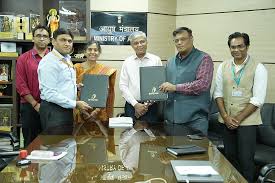
NEW DELHI — In a major step toward making traditional Indian medical knowledge accessible to everyone, the Ministry of Ayush has signed a historic Memorandum of Understanding (MoU) with the Digital India BHASHINI Division. This strategic partnership aims to build a robust multilingual ecosystem across all digital platforms under the ministry’s control. By integrating cutting-edge Artificial Intelligence (AI) and Natural Language Processing (NLP) tools, the initiative will remove language barriers, allowing citizens nationwide to access reliable information on Ayurveda, Yoga, Naturopathy, Unani, Siddha, and Homeopathy in their own regional languages.
Democratising Traditional Healthcare Knowledge
For decades, a significant portion of India’s traditional medical wisdom, research papers, and wellness guidelines remained trapped in specific languages, limiting its reach to a broader audience. The collaboration with the Digital India BHASHINI Division—a dedicated initiative under the Ministry of Electronics and Information Technology (MeitY)—is set to change this dynamic completely. Through this partnership, the Ministry of Ayush will deploy voice-based and text-based AI translation tools across its web portals, mobile applications, and citizen-facing digital services.
The primary goal is to ensure that a farmer in rural Tamil Nadu, a teacher in Assam, or a businessman in Gujarat can access complex medical information, lifestyle guidelines, and government wellness schemes in their native dialects. This move aligns directly with the central government’s broader vision of digital inclusion, ensuring that advanced technology benefits everyday public healthcare.
Technical Integration and Voice-First Services
The core of this digital transformation relies on the BHASHINI platform’s open-source language models, which have been trained on extensive datasets across multiple scheduled Indian languages. The technical integration will happen in phases, starting with the translation of the ministry’s main public portals, educational resources, and standard treatment guidelines.
Crucially, the project will place a strong emphasis on “voice-first” applications. Recognising that a large part of the population prefers spoken communication over reading long text, the system will introduce real-time voice recognition and text-to-speech tools. This means citizens can ask health-related questions in their local dialect and receive immediate, spoken responses regarding Ayush practices, home remedies, and nearby public wellness clinics. Furthermore, the collaboration will help digitize and translate ancient medical manuscripts, ensuring this historic knowledge is preserved and easily accessible to modern researchers worldwide.
Enhancing Global and Local Outreach
Beyond local healthcare delivery, this partnership will significantly boost the global outreach of traditional Indian medicine. By using automated translation pipelines, the Ministry of Ayush can easily translate its research findings, clinical trial updates, and wellness advisories into major international languages, strengthening India’s position in global holistic healthcare.
Locally, the system will help train and upskill thousands of grassroots healthcare workers, including Accredited Social Health Activists (ASHA) and Ayush community officers. By providing training materials and diagnostic guides in regional languages, the ministry can ensure that rural healthcare providers are better equipped to implement preventive health measures in their communities.
A Step Toward Unified Digital Health
Government officials note that this MoU represents a vital convergence of technology and traditional heritage. By combining ancient medical wisdom with modern AI language processing, the country is setting a new benchmark for inclusive healthcare administration. As the technical teams begin integrating the software, the partnership is expected to bridge the digital and linguistic divide, making holistic health management accessible to every citizen, regardless of their literacy level or geographic location.