

Strengthening Healthcare Preparedness in the North East
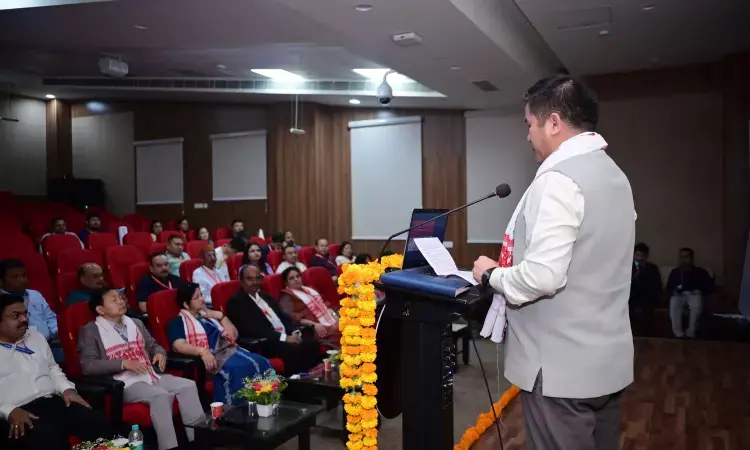
New Delhi: All India Institute of Medical Sciences, Guwahati successfully conducted the first-ever Regional Workshop on Disaster-Resilient Hospitals for the North Eastern Region, marking a major step toward improving disaster preparedness and resilience in healthcare institutions across the region.
Collaborative Initiative Under National Framework
The two-day programme was jointly organised by the Department of Hospital Administration at All India Institute of Medical Sciences, New Delhi and AIIMS Guwahati under the aegis of the Disaster Cell, Ministry of Health and Family Welfare, Government of India. The initiative aimed to strengthen institutional readiness against natural and man-made disasters.
Wide Participation from North Eastern and Eastern States
The workshop brought together delegates from all eight North Eastern states—Assam, Arunachal Pradesh, Meghalaya, Manipur, Mizoram, Nagaland, Sikkim and Tripura—along with representatives from West Bengal and Odisha. Participants also included officials from North Eastern Indira Gandhi Regional Institute of Health and Medical Sciences, Shillong.
Expert Faculty and Multi-Sectoral Representation
The workshop featured eminent faculty from All India Institute of Medical Sciences, New Delhi, AIIMS Guwahati and All India Institute of Medical Sciences, Nagpur. Specialists from Indian Institute of Technology Delhi, leading corporate hospital chains, the Regional Fire Training Centre (Fire & Emergency Services), and the Cyber Security Cell, CID Assam also contributed to the sessions.
Focus on Structural and Clinical Preparedness
Key thematic areas included structural safety in hospitals, earthquake-resilient design, emergency response protocols, and disaster management planning. Sessions also covered risk assessment, mitigation strategies, and mass casualty management to enhance on-ground response capabilities.
Addressing Fire, Oxygen and CBRNE Risks
Participants were trained in oxygen management systems, fire safety preparedness, and handling Chemical, Biological, Radiological, Nuclear and Explosive (CBRNE) emergencies. The discussions integrated clinical, administrative and engineering perspectives to create a comprehensive disaster management framework.
Emphasis on IT Systems and Cyber Security
Recognising the growing digital footprint of healthcare institutions, the workshop also focused on strengthening IT systems and cyber security measures. Experts emphasised safeguarding hospital data infrastructure to ensure uninterrupted healthcare delivery during emergencies.
Training of Trainers Model for Wider Impact
Designed as a Training of Trainers (ToT) programme, the workshop aims to empower delegates to replicate similar training initiatives in their respective states and institutions. As the first integrated workshop of its kind in the North East, it sets a pioneering benchmark for enhancing disaster resilience, response capacity and institutional preparedness across healthcare facilities in the region.
