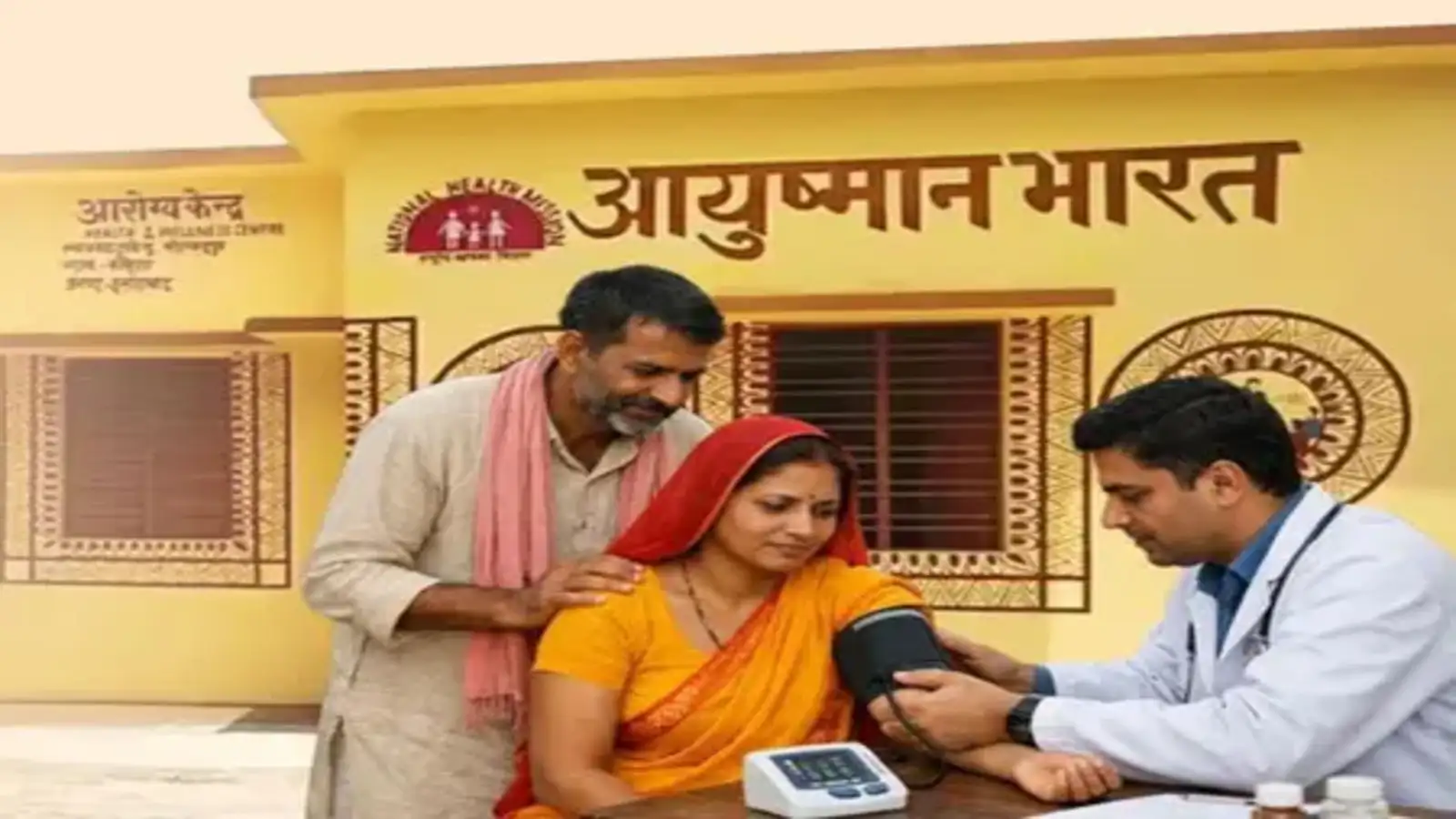
NEW DELHI — In a historic development for India’s healthcare infrastructure, the Ayushman Bharat Digital Mission (ABDM) has officially crossed the monumental milestone of generating over 90 crore Ayushman Bharat Health Account (ABHA) numbers. This landmark achievement, announced by the National Health Authority (NHA), positions India’s digital health ecosystem as one of the largest and most sophisticated public medical data platforms in the world.
For practicing physicians, hospital administrators, and clinical consultants across the country, this development marks a critical shift from paper-heavy medical records to a fully integrated, interoperable digital ecosystem. The massive expansion of verified ABHA accounts signifies that an overwhelming majority of the Indian patient demographic is now structurally prepared to transition toward longitudinal digital health tracking, direct teleconsultations, and seamless cross-border clinical data exchange.
Driving Interoperability and Clinical Efficiency
The core objective of the ABDM framework is the creation of a seamless digital highway connecting various stakeholders within the healthcare industry. The generation of 90 crore ABHA numbers serves as the foundational layer of this transformation. Every ABHA account functions as a unique, 14-digit digital identifier that allows citizens to link, store, and share their medical histories—including diagnostic reports, prescriptions, vaccination records, and discharge summaries—with registered healthcare providers across the country.
For Indian doctors, who frequently grapple with incomplete patient histories, unreadable handwritten prescriptions, and lost diagnostic charts, the proliferation of ABHA accounts offers an immediate solution to clinical workflow bottlenecks. With explicit, consent-based access, a treating consultant in a tertiary hospital can instantly pull up the historical health records of a patient originally treated at a rural primary health centre (PHC). This eliminates redundant diagnostic testing, minimizes adverse drug interactions, and drastically reduces the turnaround time in emergency care settings.
Institutional Adoption and the Scan & Share Success
The exponential surge toward the 90 crore milestone has been heavily accelerated by institutional mandates and the widespread adoption of the ABDM ‘Scan & Share’ OPD registration service. Implemented across thousands of public and private hospitals nationwide, the Scan & Share mechanism allows patients to bypass long queues at OPD registration counters by simply scanning a localized QR code via their smartphones, instantly sharing their basic demographic details with the hospital’s management system.
This system has dramatically optimized hospital administration, allowing facilities to reallocate human resources from manual data entry to active clinical assistance. Furthermore, state health departments have aggressively integrated ABHA generation into existing government schemes, welfare drives, and routine immunisation programs, ensuring that digital health enrolment penetrates deep into rural and semi-urban populations.
Data Security, Privacy, and the Role of Private Practitioners
As the network expands toward near-universal coverage, the NHA has placed significant emphasis on addressing data security and patient privacy concerns. The ABDM framework operates strictly on a federated architecture, meaning that health records are not stored centrally on a single government server. Instead, they remain secure at the point of creation—such as the specific testing laboratory, hospital, or diagnostic center—and are only encrypted and transmitted across the network when the patient explicitly approves a digital consent request.For private practitioners and standalone clinics in India, this milestone represents an urgent call to update internal technologies. To interact with the 90 crore ABHA holders, private clinics must adopt ABDM-compliant Hospital Management Information Systems (HMIS). While some small-scale practices have raised concerns regarding the initial compliance costs and learning curves associated with digital systems, the government continues to offer financial incentives through the Digital Health Incentive Scheme (DHIS), which provides cash back to hospitals and software providers for achieving specific digital transaction benchmarks.