

New Centre to Advance Combat Medicine, Trauma Care, CBRNe Response and Military Medical Research
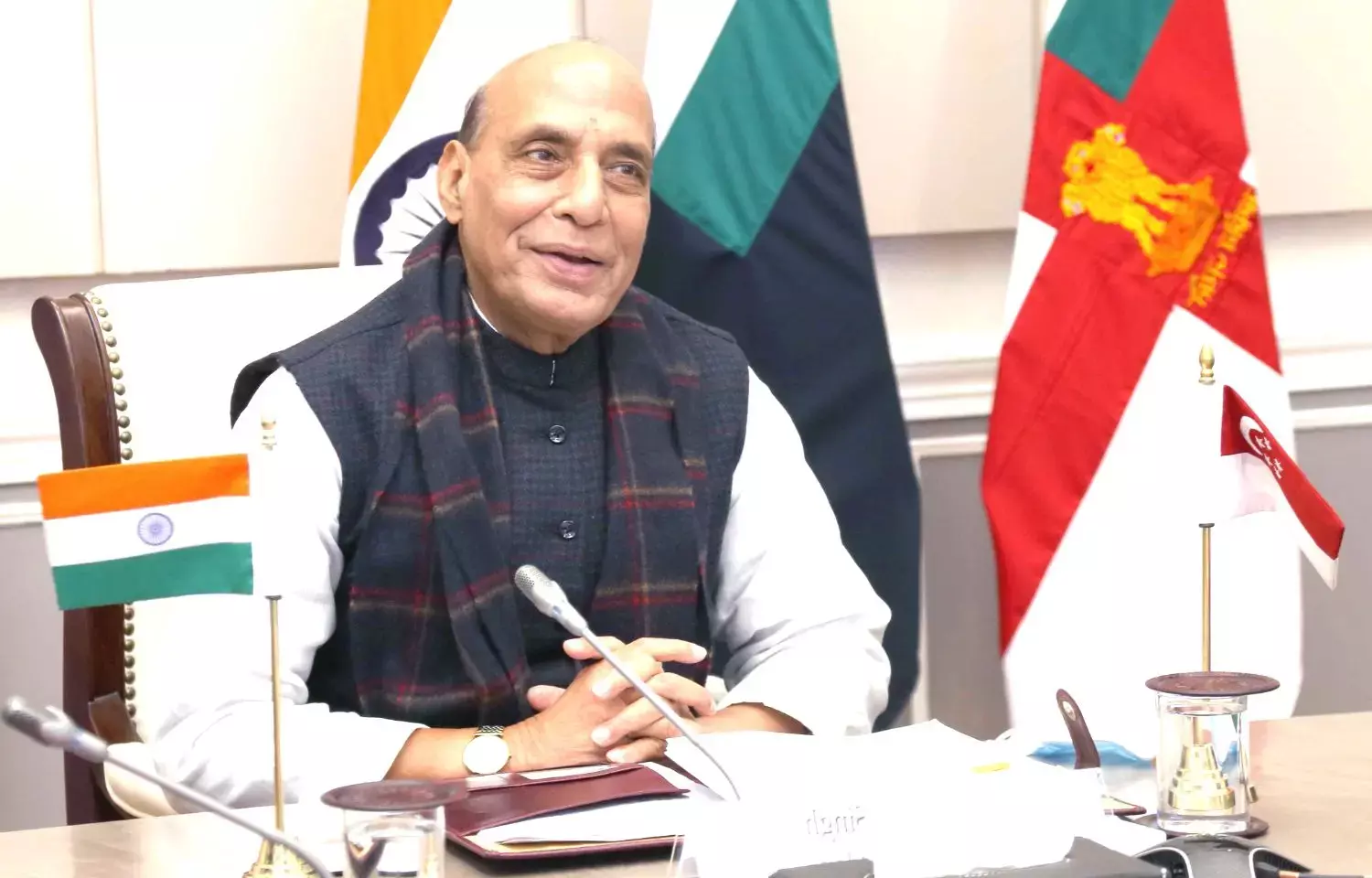
Defence Minister Rajnath Singh on Wednesday inaugurated India’s first dedicated Department of Military Medicine at the Command Hospital (Central Command) in Lucknow, describing it as a major step towards strengthening the country’s defence medical capabilities and preparing the Armed Forces to tackle emerging security and healthcare challenges.
The department, inaugurated virtually, is the country’s first academic and operational facility exclusively focused on military medicine. It has been established under the Directorate General of Medical Services (Army) and will function as the principal academic, research and doctrinal hub for the Armed Forces Medical Services (AFMS).
Speaking at the inauguration, Rajnath Singh highlighted the increasing importance of military medicine, stating that the discipline addresses the physical and psychological challenges faced by soldiers during combat and deployment in extreme operational environments.
“Our soldiers are deployed in some of the world’s most challenging terrains and climates. This department will develop specialised medical protocols suited to these operational conditions,” the Defence Minister said.
Emphasising evolving security threats, Singh noted that the risk posed by weapons of mass destruction continues to exist. He said the new department would serve as a centre for research and innovation, helping India prepare for emerging threats driven by rapid technological advancements.
According to the Defence Ministry, the department will strengthen expertise in disaster response, field hospital deployment, mass casualty management and epidemic control. It will also support India’s humanitarian assistance and disaster relief (HADR) missions and its contributions to United Nations peacekeeping operations.
The Department of Military Medicine will offer structured education and specialised training in military and operational medicine. It will facilitate postgraduate programmes in combat medicine, combat surgery, trauma care and other specialised fields while promoting indigenous research aligned with India’s defence requirements.
Rajnath Singh expressed confidence that the department would become a premier training centre for young doctors of the Army Medical Corps, equipping them with advanced battlefield healthcare skills and life-support techniques.
He also said the initiative would create new career opportunities for medical professionals by introducing super-specialisation in military medicine, strengthening India’s medical research ecosystem and enhancing its global standing in defence healthcare.
Highlighting the importance of preventive healthcare, Singh described it as the first line of defence for national security. He called for greater use of disease surveillance, vaccination, sanitation, nutrition, occupational health, physical fitness and routine health screenings to maintain troop readiness.
The Defence Minister further stressed the role of emerging technologies such as artificial intelligence (AI), wearable devices, predictive analytics and advanced diagnostics in enabling real-time health monitoring and early detection of health risks among soldiers.
The department will focus on specialised areas including military trauma and damage control, combat psychiatry, environmental and operational medicine, military medical logistics, Chemical, Biological, Radiological, Nuclear and Explosive (CBRNe) medical response, emergency medicine, critical care, disaster medicine, humanitarian assistance and disaster relief (HADR), research, audit and data analytics.
The Defence Ministry said the institution will also promote technology-driven battlefield medicine, simulation-based training, telemedicine, prolonged field care and medical decision-support systems.
The department will be developed in phases. The initial phase will focus on establishing academic programmes, while subsequent phases will create Centres of Excellence in Humanitarian Assistance and Disaster Relief (HADR) and CBRNe medicine.
