

Medical colleges must meet strict OPD, bed occupancy, surgical and diagnostic benchmarks to start or expand postgraduate seats
New Guidelines Aim to Standardise PG Medical Education
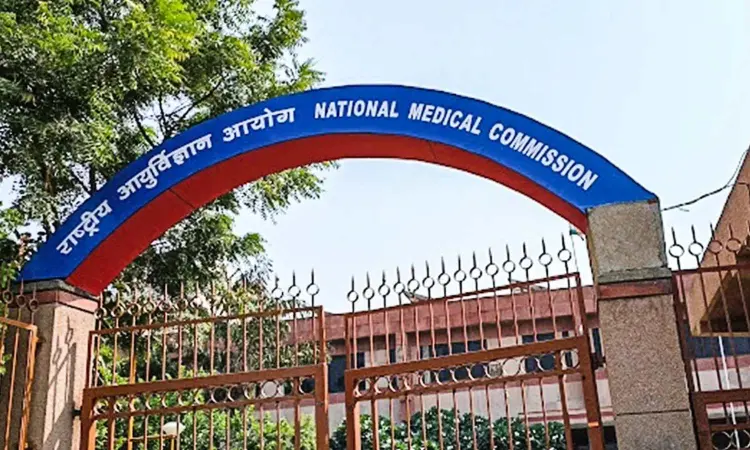
The National Medical Commission (NMC) has released amended Minimum Standards of Requirements for Post Graduate Courses 2023 (PGMSR-2023), laying down detailed criteria for clinical workload, diagnostic facilities, and departmental functioning across medical colleges in India.
The revised norms, issued by the Postgraduate Medical Education Board (PGMEB), came into effect from February 20, 2026, and were formally notified through a public notice on March 11, 2026. All institutions have been directed to comply immediately.
Minimum OPD Attendance Criteria for PG Courses
As per the updated guidelines, medical colleges must maintain a minimum average daily OPD attendance of 60 patients in major departments such as:
- General Medicine
- General Surgery
- Paediatrics
- Orthopaedics
- Obstetrics and Gynaecology
- Respiratory Medicine
- ENT (Otorhinolaryngology)
- Ophthalmology
- Dermatology, Venereology & Leprosy
- Psychiatry
- Emergency Medicine
Additionally, 12 extra patients per day will be required for every additional PG seat in these departments.
For other broad and super-specialty departments, the minimum OPD requirement is 30 patients per day, with 6 additional patients per PG seat.
Bed Occupancy and Hospital Infrastructure Requirements
The NMC has mandated that average bed occupancy must remain at least 80% throughout the year in all departments, ensuring adequate clinical exposure for postgraduate students.
Surgical Workload & Operation Theatre Training
The revised PGMSR 2023 sets clear expectations for surgical training:
- PG students must receive Operation Theatre (OT) training at least 2 full days per week
- Second-year students onwards should work as First Assistant or under supervision
- Each faculty member should ideally get 2 full independent OT days weekly
- Each unit must have:
- Minimum 2 operation days per week
- At least 3 operation tables per full operation day
Further, each unit must perform:
- Minimum 3 major surgeries
- Minimum 6 minor surgeries per operation day
(Short-duration procedures will not be counted.)
Anaesthesia Department: Seats Linked to OT Capacity
The guidelines specify that PG seats in Anaesthesia will depend on:
- Number of surgeries performed daily
- Number of fully functional operation theatres
Up to 2 PG seats per operation table (running full day on all working days) may be permitted, provided other criteria are met.
Obstetrics Requirement: Minimum Deliveries for PG Seats
For departments handling obstetrics services:
- Minimum 25 deliveries per week required for 2 PG seats
- 5 additional deliveries per week needed for each extra seat
Diagnostic Workload Benchmarks Introduced
To ensure adequate hands-on training, NMC has fixed minimum daily diagnostic requirements:
- X-rays: 60 per day (+12 per additional seat)
- Ultrasound: 30 per day (+6 per additional seat)
- CT Scan (in-house): 10 per day (+2 per additional seat)
- Special Investigations: 3 per day (+1 per additional seat)
Additionally, an MRI facility is mandatory for Radio-diagnosis PG courses, with:
- Minimum 3 MRI scans per day
- 1 additional MRI per extra seat
Laboratory Workload Criteria for PG Courses
The guidelines also define minimum lab workloads:
- Histopathology: At least 20% of major surgeries
- Cytopathology: Minimum 1% of total daily OPD load
- Haematology & Biochemistry: 15% of OPD load
- Microbiology: 5% of OPD load
PG seats must increase proportionately with workload in each category.
Strict Compliance Mandated for Medical Colleges
The revised PGMSR 2023 norms clarify that fractional lab tests will not be counted separately, ensuring accurate workload assessment.
With these updated standards, the National Medical Commission aims to improve the quality of postgraduate medical education by ensuring adequate patient load, infrastructure, and clinical exposure across institutions.
Medical colleges nationwide are now required to align with these norms to start new PG courses or expand existing seats.

