

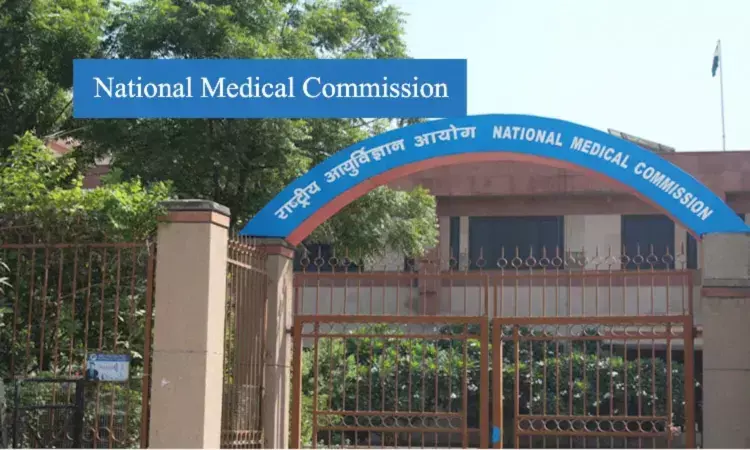
Updated norms set stricter infrastructure, faculty, and hospital requirements for postgraduate medical courses across India
New Delhi: The Postgraduate Medical Education Board (PGMEB) of the National Medical Commission (NMC) has issued a fresh amendment to the Minimum Standards of Requirements for Post-Graduate Courses 2023 (PGMSR-2023), directing all medical colleges and institutions across the country to comply with the updated rules with immediate effect.
The amendment was announced through a public notice dated March 11, 2026. According to the notice, the revised standards for running postgraduate medical courses came into effect on February 20, 2026, and define the minimum requirements that institutions must meet to start and operate PG medical programmes in India.
Amendment Issued Under NMC Act and Existing Regulations
The Post-Graduate Medical Education Board stated that the updated standards have been issued under Section 25(1)(a), (c), (d), and (e) of the National Medical Commission Act, 2019, along with Regulation 10 of the Establishment of New Medical Institutions, Starting of New Medical Courses, Increase of Seats for Existing Courses and Assessment and Rating Regulations, 2023, and Regulation 3.4 of the Post-Graduate Medical Education Regulations, 2023.
These provisions empower the board to define the Minimum Standards of Requirements (MSR) for postgraduate medical education, including infrastructure, faculty strength, equipment, and clinical facilities required for medical colleges.
Evolution of PGMSR-2023
The first version of the Post-Graduate Minimum Standards of Requirements 2023 was issued by the National Medical Commission on January 16, 2024. Since then, the standards have undergone multiple revisions.
Earlier amendments were released on August 23, 2024, and January 14, 2025, to clarify and update requirements related to postgraduate medical education. The latest amendment issued in February 2026 introduces further updates that institutions must follow immediately.
The NMC, while addressing directors, principals, and deans of medical colleges across India, stated that all institutions and stakeholders should take note of these amendments and ensure compliance.
Minimum Infrastructure and Hospital Requirements
According to the amended guidelines, institutions conducting both undergraduate and postgraduate teaching must fulfil the minimum standards for undergraduate training prescribed by the Undergraduate Medical Education Board (UGMEB) while also meeting additional requirements for postgraduate training.
Hospitals attached to postgraduate institutes must comply with national building norms and local statutory regulations. They must include essential facilities such as outpatient and inpatient departments, operation theatres, Central Sterile Services Department (CSSD), intensive care units, radiology and laboratory services, emergency areas, and administrative infrastructure.
Institutions must also obtain all necessary regulatory approvals and clearances from relevant authorities, including state and central governments, pollution control boards, and municipal bodies.
Equipment, Teaching Facilities and Digital Systems
The revised standards emphasise the availability of modern equipment and training facilities across departments. Each department must maintain adequate in-house equipment and training infrastructure.
Medical colleges must also establish digital libraries, seminar halls with audio-visual facilities, and high-speed internet connectivity to enable live relay from operation theatres and participation in global academic programmes.
The guidelines also require institutions to maintain digital medical records for admissions, discharges, surgeries, deliveries, investigations, births, and deaths using ICD classification systems.
Patient Care and Clinical Training Requirements
To ensure adequate clinical exposure for postgraduate students, the guidelines mandate that at least 80 per cent of hospital beds should remain occupied throughout the year by patients requiring inpatient care.
In addition, at least 15 per cent of beds in departments providing postgraduate training must be dedicated ICU or High Dependency Unit beds, with two-thirds of these designated as ICU beds.
Hospitals must also maintain adequate outpatient department space, examination cubicles, and teaching rooms equipped with audio-visual facilities for clinical discussions and demonstrations.
Mandatory Facilities and Regulatory Compliance
The updated rules require every medical college to maintain a well-equipped air-conditioned blood bank capable of providing component therapy. Blood transfusion services must comply with the guidelines of the National AIDS Control Organization and relevant provisions of the Drugs and Cosmetics Rules.
Medical colleges must also install closed-circuit cameras at designated locations as prescribed by the National Medical Commission.
In addition, institutions must maintain an official website displaying important information, including details of departments, postgraduate courses and seats, faculty information for the past three years, student admissions data, outpatient attendance statistics, bed occupancy rates, and surgical workload.
Requirements for Standalone PG Medical Institutes
Standalone postgraduate medical institutes must have a minimum of 220 hospital beds and maintain fully functional departments such as Biochemistry, Pathology, Microbiology, Radio-diagnosis, and Anaesthesiology where surgical specialties are offered.
These institutes must also provide teaching facilities for basic science subjects required for postgraduate training.
Integration with ABHA and Faculty Attendance
The amended guidelines mandate that all medical institutions integrate their systems with the Ayushman Bharat Health Account (ABHA) framework. Hospitals must facilitate the generation and linking of ABHA IDs for patients attending outpatient and inpatient services.
Faculty members, senior residents, and junior residents must mark their attendance through the Aadhaar Enabled Biometric Attendance System (AEBAS) in accordance with NMC guidelines.
Faculty members counted for determining seat capacity in one institute cannot be counted in another institution during the same academic year if they leave midway.
Seat Limits and Post-Doctoral Courses
The rules also clarify that while considering new postgraduate courses or increasing seat intake, a maximum of four seats will be permitted in non-government medical colleges.
Institutions may admit one Post-Doctoral Certificate Course (PDCC) or Post-Doctoral Fellowship (PDF) student annually over and above the sanctioned seats in each unit.
The NMC stated that compliance with these updated requirements will be reviewed periodically and institutions may receive further directions based on assessments of clinical workload, patient records, surgeries, births, deaths, dialysis procedures, and ventilator support cases in hospitals.
