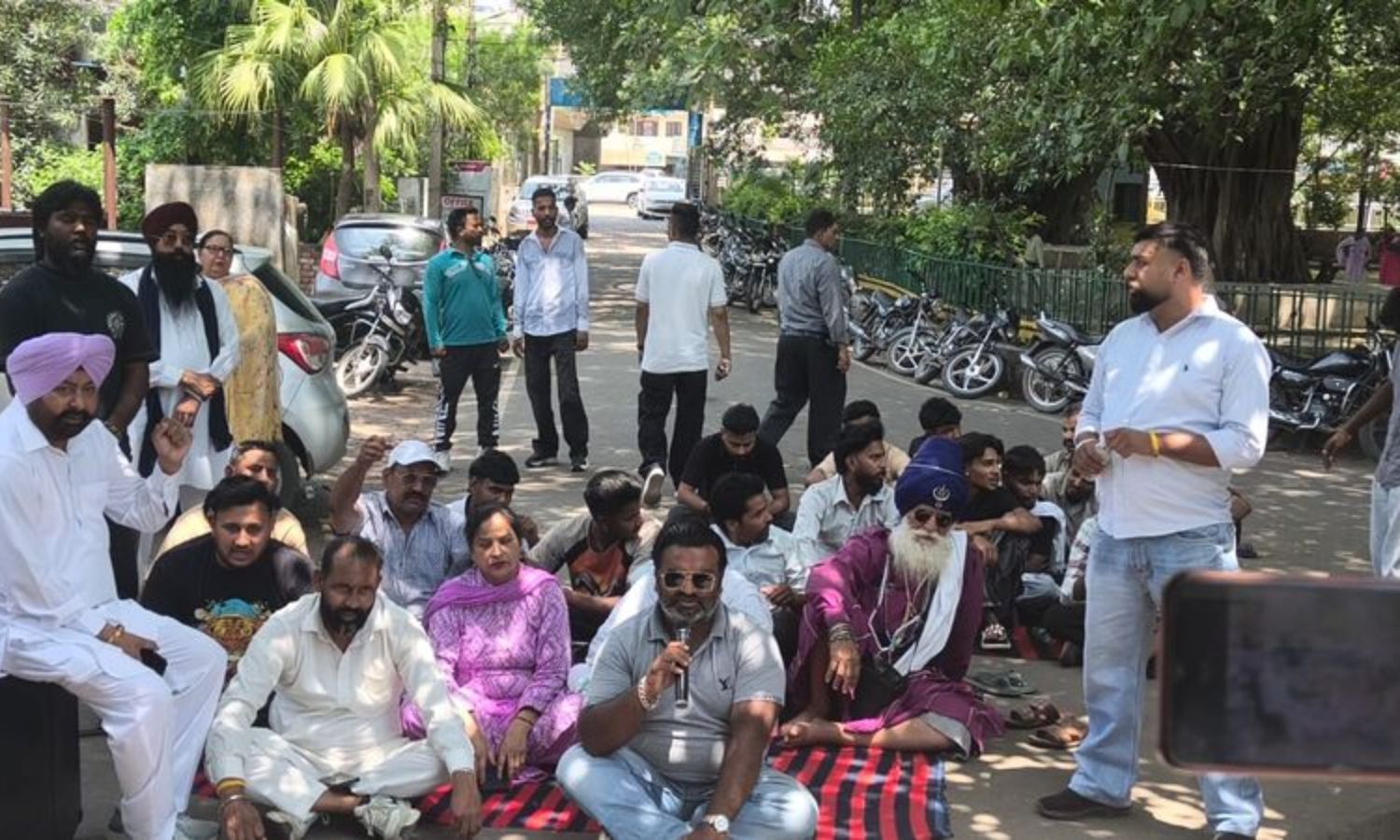
PHAGWARA — High drama and volatile street protests erupted outside a premier private healthcare facility in Phagwara following allegations of severe medical negligence that led to the sudden demise of a patient. An angry mob comprising the deceased’s family members, local residents, and community activists staged an aggressive sit-in demonstration, blocking the main approach roads and bringing routine operations at the medical institution to a complete standstill.
A Sudden Fatality Sparks Outrage
The crisis began following the unexpected deterioration and subsequent death of a 42-year-old local resident who had been admitted to the facility for a routine surgical intervention. According to family members, the patient was ambulatory and stable upon arrival. However, shortly after entering the operation theater, clinical complications arose rapidly.
The family alleged that the attending medical team failed to perform mandatory pre-operative diagnostic screenings and administered an incorrect dosage of anesthesia, which triggered immediate cardiac distress. Rather than providing transparent updates, hospital administrators allegedly delayed informing the anxious relatives gathered outside for several hours. By the time senior consultants officially broke the news of the mortality, suspicions of a cover-up had already taken deep root among the kin.
Escalation and Institutional Vandalism
As news of the death spread, a large crowd gathered at the hospital gates, and the emotional grief quickly transformed into collective rage. Breaking through the facility’s primary security perimeters, a faction of the protesters breached the administrative offices and reception lounge, smashed glass partitions, overturned computers, and damaged hospital furniture.
On-duty junior doctors and nursing staff were forced to retreat to secure internal bays to protect themselves from physical harm. The protestors then shifted their demonstration outside, positioning the body of the deceased directly across the main thoroughfare. Raising loud slogans against the hospital management and the operating doctors, the agitators refused to allow state authorities to shift the body for a mandatory post-mortem examination, demanding the immediate arrest of the medical staff under criminal negligence charges.
Law Enforcement Intervenes to Subdue the Crowd
Recognizing the potential for a larger law enforcement breakdown, a heavy contingent of police personnel, led by senior sub-divisional officers, rushed to the spot to form a protective cordon around the clinical complex. Riot control units were deployed to prevent further damage to life-saving medical infrastructure and to ensure the safety of critical care patients trapped inside the intensive care units.
An initial standoff ensued as police officers attempted to negotiate with the striking family members. Law enforcement officials emphasized that while the family’s grief was entirely valid, blocking emergency vehicle access and vandalizing healthcare facilities directly compromised public safety. Following prolonged negotiations, the police administration gave a formal assurance that a transparent, high-level inquiry would be initiated into the clinical sequence of events.
Shifting to Statutory Medical Inquiries
To defuse the immediate bottleneck, local administrative heads confirmed that a specialized panel of independent medical experts from the civil hospital would be constituted to oversee the autopsy and evaluate the case sheets. Under current legal frameworks, criminal charges regarding medical errors cannot be registered arbitrarily without an initial review by a certified state medical board.
While the physical blockade on the road was eventually cleared after several hours, the atmosphere around the Phagwara medical hub remains highly charged. Local resident associations and medical unions have condemned the vandalism, stating that deploying mob violence against doctors complicates crisis resolution. Conversely, consumer rights advocates are utilizing the incident to demand the strict implementation of patient charters and real-time grievance redressal desks within private clinical networks to prevent such tragic breakdowns of public trust in the future.