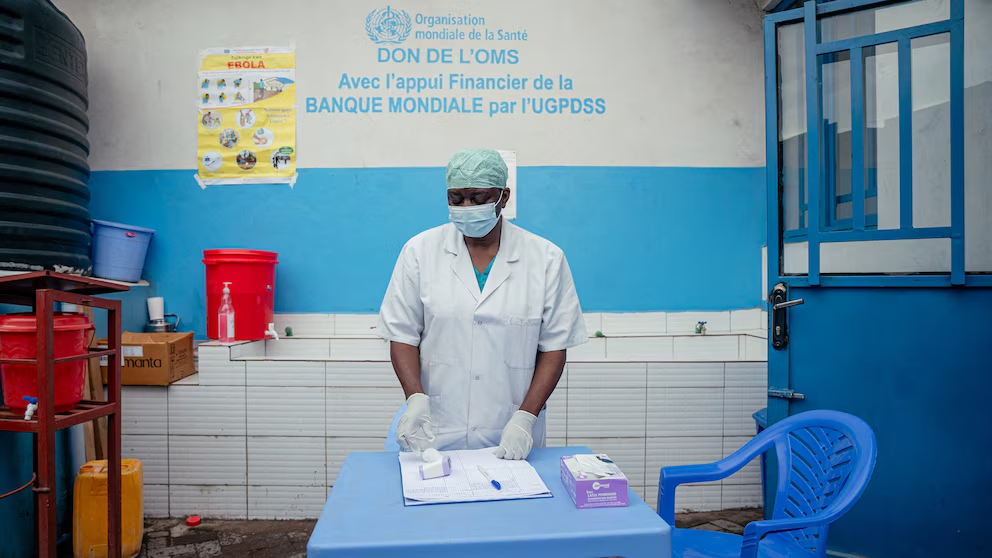
ITURI PROVINCE, DR CONGO — Frontline medical workers in the eastern Democratic Republic of the Congo (DRC) and neighbouring Uganda have issued a harrowing warning, describing the newly emerged Ebola virus epidemic as “completely out of control”. The World Health Organization (WHO) has officially upgraded the crisis to a Public Health Emergency of International Concern (PHEIC). This designation underscores a terrifying dynamic: the rate of new infections is aggressively outpacing local and international containment capabilities. For the Indian medical fraternity, this crisis serves as a stark reminder of clinical vulnerabilities, changing viral pathologies, and the absolute necessity of strict travel-history screening.
+————————————+————————-+—————————————-+
| Clinical Parameters | Bundibugyo Ebolavirus | Zaire Ebolavirus (Historical Baseline) |
+————————————+————————-+—————————————-+
| Current Vaccine Availability | None Available | Ervebo Vaccine Approved (~100% Effic.) |
| Targeted Monoclonal Antibodies | Experimental Only | Inmazeb & Ebanga Standardized |
| Point-of-Care Diagnostics | Severe Lab Shortages | Widely Distributed GeneXpert Assays |
| Primary Transmission Vectors | Corrosive Body Fluids | Corrosive Body Fluids |
+————————————+————————-+—————————————-+
The Nightmare of an Untreatable Strain
At the heart of the current crisis is the identification of a rare variant: the Bundibugyo ebolavirus species. Unlike the more common Zaire strain—which devastated West Africa from 2014 to 2016 and can now be combated using the highly effective Ervebo vaccine—the Bundibugyo strain has no licensed vaccine and no validated therapeutic cure.
“We are fighting this blind,” a frontline physician told international correspondents, highlighting a severe deficit in basic protective equipment, isolation units, and laboratory testing capacity. Frontline clinicians explain that without immediate diagnostic verification, maintaining community trust is nearly impossible.
Compounding the biological threat is a catastrophic funding collapse. International humanitarian assistance portfolios in eastern Congo have dropped dramatically over the past fiscal cycle. This reduction has severely crippled the field infrastructure formerly maintained by the US Centers for Disease Control and Prevention (CDC) and other global health agencies.
A Catastrophic Collision of Disease and Conflict
The epidemic’s epicenter in the DRC’s Ituri and North Kivu provinces represents a highly complex operating environment. WHO Director-General Dr. Tedros Adhanom Ghebreyesus warned of a “catastrophic collision of disease and conflict,” noting that public health teams cannot isolate the sick or trace contacts while active military shelling occurs.
[900+ Suspected Cases Reported]
│
▼
[3,600+ Active Contacts Tracked]
│
▼
[Severe Shortage of Hazmat/PPE] ──► [Frontline Healthcare Worker Infections]
│
▼
[Community Distrust & Unrest] ──► [Patients Absconding from Isolation]
This severe breakdown has triggered local unrest. Angry crowds have repeatedly attempted to reclaim the bodies of deceased relatives from isolation facilities, rejecting safe burial protocols. Several patients have absconded from medical units, vanishing back into mining hubs and mobile communities. This development has prompted Uganda to temporarily close sections of its border after detecting cross-border cases in local health workers and transit drivers.
Immediate Implications and Protocol for Indian Doctors
The Union Health Ministry of India has officially confirmed that no cases of Ebola Virus Disease (EVD) have been reported within the country. Senior Indian health experts, including former AIIMS Director Dr. Randeep Guleria, emphasize that there is no need for public panic. Unlike SARS-CoV-2, Ebola does not spread via casual respiratory droplets; it requires direct contact with infected blood, vomit, secretions, or contaminated materials.
However, India’s high-density population mandates extreme clinical vigilance:
- Compulsory Travel Audits: Every physician operating in emergency departments, internal medicine clinics, and gastroenterology suites must execute routine travel-history audits. Any patient presenting with abrupt onset of high fever, severe myalgia, vomiting, diarrhea, or unexplained hemorrhagic manifestations must be immediately questioned regarding transit through Central or East Africa within the preceding 21 days.
- Isolation Infrastructure: In suspected cases, clinics must bypass standard outpatient queues and place the patient in isolated, negative-pressure containment. Standard surgical masks are entirely insufficient; healthcare personnel must utilize full-body fluid-resistant personal protective equipment (PPE).
- Institutional Reporting: Any suspected cluster or isolated high-risk individual must be reported immediately to the National Centre for Disease Control (NCDC). Samples must be coordinated through state channels directly to apex laboratories, such as the ICMR-National Institute of Virology (NIV) in Pune, using strict Category A infectious substance transport regulations.