

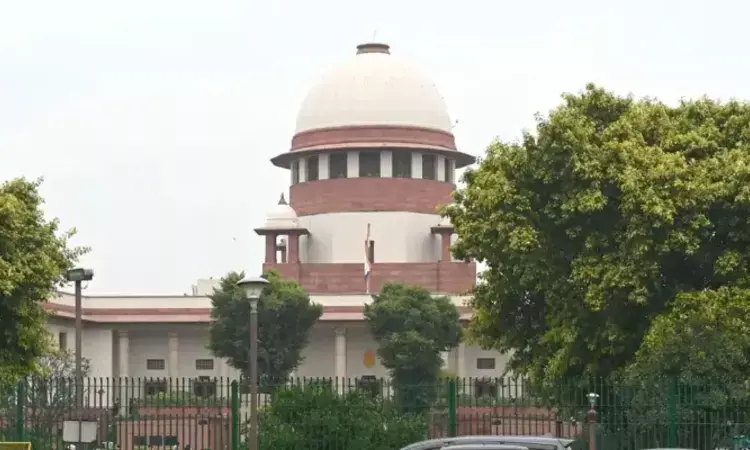
Court says discontinuing treatment should not mean abandoning patients; calls for structured palliative and end-of-life care
New Delhi: The Supreme Court has strongly criticised the routine hospital practice of discharging patients “against medical advice” (DAMA) when treatment is discontinued, warning that such actions may compromise patient care and shift responsibility away from doctors and healthcare institutions.
The court observed that DAMA forms are often issued in cases where patients are on life-support systems such as ventilators, and families choose to take them home after doctors indicate that further curative treatment may not be possible. The remarks were made while delivering a significant ruling that allowed passive euthanasia for a 32-year-old man who has remained in a permanent vegetative state for more than a decade.
Court Stresses Responsibility of Hospitals Even After Treatment Withdrawal
While outlining the legal and medical framework for withdrawal of life-sustaining treatment, the bench emphasised that even when treatment is legally withdrawn, doctors and hospitals must ensure that patients are not abandoned and that proper medical care continues.
The bench, comprising Justice JB Pardiwala and Justice KV Viswanathan, referred to the guidelines laid down in the 2018 Supreme Court judgment in the Common Cause v. Union of India case. It noted that once a lawful decision is taken to withdraw or withhold treatment, the process must follow a structured and humane medical approach focused on palliative and end-of-life care.
“The withdrawal or withholding of treatment must not, in effect or execution, result in the abandonment of the patient,” the court said.
Shift Toward Palliative and End-of-Life Care
The court clarified that when curative treatment is discontinued, medical care should transition to a carefully structured and medically supervised palliative and end-of-life care plan. Such care should focus on pain relief, symptom management, and maintaining the patient’s dignity during the final stage of life.
According to the bench, the end of curative treatment does not mean the end of medical responsibility. Instead, doctors must ensure that patients continue to receive appropriate supportive care.
Supreme Court Disapproves Routine Use of DAMA Forms
The bench also expressed strong disapproval of the routine hospital practice of issuing “discharge against medical advice,” also known as “leaving against medical advice” or “discharge at own risk”.
“We strongly disapprove of the routine practice of ‘discharge against medical advice’… which is misused in situations where medical treatment stands discontinued,” the judgment stated.
The court observed that hospitals sometimes resort to DAMA when curative treatment options are exhausted. However, it stressed that the end of curative care should not result in hospitals withdrawing responsibility for the patient’s well-being.

